Whole-House Renovation Guide: Planning a Full-Home Project in 2026
A 2026 guide to whole-house renovation — phasing, sequencing trades, living through the work, financing and the timeline realities of renovating an entire home.
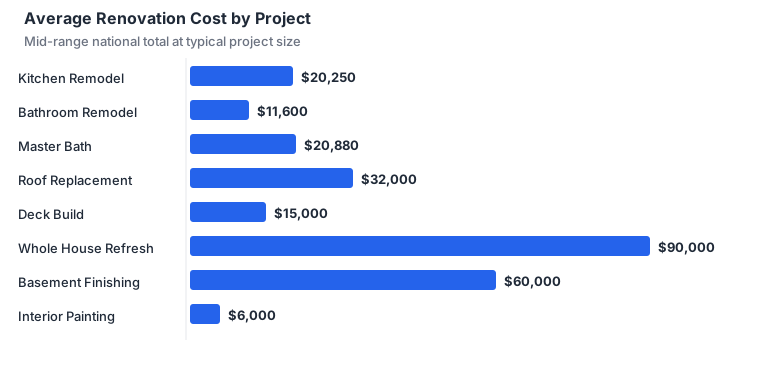
A whole-house renovation is not ten small projects — it is one large, interdependent undertaking where the decisions compound and the disruption is total. Unlike a single room, a full-home project touches every system, every finish and often the structure, which is why it demands more planning, more financing and more patience than anything else a homeowner attempts. This guide covers how to approach renovating an entire home without losing control of the budget, the schedule or your sanity.
Phasing Versus Doing It All at Once
The first decision is whether to renovate the whole home in one continuous push or phase it over months or years. Doing everything at once is efficient: trades sequence their work without repeated mobilization, you endure the disruption once, and the result is cohesive. The downside is maximum disruption — most families move out — and maximum upfront cost. Phasing spreads the expense and lets you occupy the home between stages, but it costs more overall due to repeated mobilization and carries the risk of living amid perpetual construction. The right answer depends on your finances, your tolerance for disruption, and whether the home is habitable during work. Many homeowners do the structural and systems work first, then phase the cosmetic rooms as cash allows.
Sequencing the Trades
A whole-house project lives or dies by sequencing. The logical order is: demolition and structural work first; then mechanical rough-in — plumbing, electrical, HVAC — followed by inspections; then insulation, drywall and the long finishing tail of flooring, cabinetry, paint and fixtures. Each trade depends on the one before, and a delay anywhere ripples through everything after. A skilled general contractor maps this critical path and protects it; a weak one lets trades stack up waiting on each other. Because so many trades touch the same spaces, communication and a single accountable manager matter more in a whole-house job than in any single-room remodel, which is why owner-building a full home is rarely wise without real construction experience.
Living Through It — or Not
The disruption of a whole-house renovation is the part first-timers underestimate most. With one or more bathrooms and the kitchen out of service, daily life becomes a logistics problem: a temporary kitchen, a bathroom schedule among family members, dust managed room by room, and the noise and strangers that come with active construction. Many families move out for the duration, which adds rent or lodging to the budget but preserves sanity and speeds the work. If you stay, build in a realistic plan for cooking, bathing and privacy before demolition begins, because the project will test it constantly. Either way, the lifestyle cost belongs in the budget as a real line item, not an afterthought.
Financing a Full Home
Financing a whole-house renovation is a different animal from funding a single room. The sums are larger, so the financing method matters more: a home equity loan or HELOC often fits a known or open-ended total, while a renovation-specific loan can unlock funds based on the home's projected after-value. Cash-out refinancing may help when rates favor it. The key discipline is the same as any project, scaled up: borrow the project cost plus contingency, not a dollar more, and compare total interest over the full term rather than the monthly payment. Because the amount is large, even a small rate difference compounds into thousands, so shopping lenders carefully is genuinely worth the effort for a whole-house job.
Protecting the Budget at Scale
Every risk that exists in a single-room remodel exists in a whole-house project multiplied. The contingency that is 10-20% for one room should lean toward the high end here, because the number of places a surprise can appear is far larger — and a surprise in a $200,000 project is a bigger absolute hit than the same surprise in a $20,000 one. Itemized bids become essential at this scale, because a vague lump sum on a whole home is impossible to manage. A running committed-versus-estimated tally, updated weekly, is the only way to see overruns forming early enough to act. The homeowners who finish a whole-house project on budget are the ones who treated it as a program with reporting, not a wish list with a checkbook.
The Hidden Whole-House Costs
- Temporary housing — rent or lodging for months if you move out.
- Whole-home systems — HVAC, electrical panel, plumbing mains often replaced together.
- Permits across many trades — inspections at every stage multiply fees and wait times.
- Repeated mobilization — if phasing, crews return multiple times.
- Containment and cleaning — dust control and final cleanup across the whole house.
At this scale, the contingency and the lifestyle costs are not padding — they are the difference between a project that finishes and one that stalls midway through your home.
Sample Whole-House Numbers
A whole-house refresh of a 2,000-square-foot home — kitchens, baths, flooring, paint, systems — might range from $90,000 to $250,000 or more depending on scope and material grade, before regional multipliers that can add 40-50% on a high-cost coast. A true gut with structural and addition work climbs higher. Model the pieces with our whole-house calculator and read the totals against our state cost guides so your expectation matches your labor market. Build the number room by room, then add the whole-home systems and contingency on top.
How To Read a Whole-House Quote
A whole-house quote is really a portfolio of sub-projects, so it must break into rooms and systems you can read. Insist on a line for each major space (kitchen, baths, flooring, paint) plus the whole-home systems (HVAC, electrical panel, plumbing mains) and a separate contingency. A single lump sum for "whole-house renovation" hides which rooms are quoted at what grade and makes overruns impossible to localize. Two detailed quotes that price each room and each system will differ predictably by grade choices; a vague one that looks cheap is almost always missing scope. Read a whole-house bid room by room and system by system, because that is the only scale at which you can actually manage it.
Common Whole-House Traps
The whole-house traps are the single-room ones multiplied. The first is no single accountable manager, so trades overlap, gap and blame each other. The second is under-scoped systems — the HVAC, panel and mains — that get noticed only when the house will not heat or the panel trips. The third is a contingency set for one room (10%) applied to a whole home, where 15-20% is wiser. The fourth is living through it without a plan, so the disruption compounds. And the fifth is financing sized to the headline construction number while forgetting the systems and contingency that push the real total far higher. Phase deliberately, sequence through one manager, and protect a real contingency, and the whole home becomes manageable instead of overwhelming.
A Sample 2,000 Sq Ft Whole-House Budget
To make the range real, here is how a whole-home refresh for a 2,000-square-foot house typically divides before regional multipliers. The kitchen, the most expensive single room, runs $30,000 to $48,000 for a mid-range scope. Two to three bathrooms add $20,000 to $45,000 depending on whether they are refreshed or fully gutted. Whole-home flooring replacement costs $12,000 to $30,000 by material. Interior painting and trim, including ceilings, runs $3,500 to $8,000. The hidden systems — HVAC update, electrical panel, plumbing mains — add $15,000 to $40,000 and are the items homeowners most often under-scope. A contingency of 15 to 20 percent on a project this size is another $15,000 to $40,000 set aside for the surprises whole homes always reveal. Added together, that is the $90,000 to $250,000 a genuine whole-house renovation reaches, and it shows why a "whole home for $50,000" figure is either cosmetic-only or missing the systems that make a house function. Read your whole-house quote room by room and system by system, and the number finally becomes something you can manage rather than fear.
One Manager Versus Many Contractors
A whole-house project forces a structural choice: hire a single general contractor who manages every trade, or act as your own GC and hire specialists room by room. The single GC charges a markup, often 10 to 20 percent, but earns it by sequencing trades so the drywaller is not waiting on the electrician, pulling permits once, and owning the inevitable overlaps and punch list. The savings of self-managing are real — you keep the markup — but so are the costs: you become the scheduler, the dispute resolver and the one liable when two trades point at each other. For a contained single-room job, self-management is feasible; for a whole home touching every system, a competent GC almost always saves money by avoiding delays and rework, even after the markup. If you do self-manage, lock a master schedule, confirm each trade's start depends on the prior one's inspection, and hold a real contingency. Decide by your own time and tolerance as much as by the dollar difference, because the wrong structure turns a whole-house renovation into a second job you did not apply for.
Frequently Asked Questions
What is the average cost of a whole-house renovation?
A whole-house refresh of a 2,000-square-foot home commonly runs $90,000 to $250,000 or more depending on scope and grade, before regional multipliers that can add 40-50% on a high-cost coast.
Should I renovate all at once or phase it?
All at once is efficient and cohesive but disruptive and upfront-costly; phasing spreads the spend and lets you occupy the home, though it costs more in repeated mobilization.
How long does a whole-house renovation take?
Typically 3-6 months depending on size, scope and whether structural changes or additions are involved; a locked design before starting protects the timeline most.
Do I need to move out during a whole-house remodel?
Often, yes — for safety, sanity and schedule speed. If you stay, build a realistic plan for cooking, bathing and privacy before demolition begins.
How should I finance a whole-house renovation?
A home equity loan, HELOC or renovation-specific loan often fits the large total; borrow the project cost plus contingency, compare total interest over the term, and confirm the payment fits your budget under stress.
Key Takeaways
- Read the whole-house quote room by room and system by system; a single lump sum hides which rooms are quoted at what grade.
- Never under-scope the hidden systems — HVAC, panel and plumbing mains — because they are what make the house actually function.
- Set a 15-20 percent contingency for a whole home, larger than the 10 percent a single room needs.
- Hire one accountable general contractor for a project this size, because the markup usually costs less than the delays and rework of self-managing.
Renovate the Whole Home With Eyes Open
A whole-house renovation rewards the homeowner who plans it as a program, not a wish list. Phase deliberately if cash is tight, sequence the trades through a single accountable manager, decide upfront whether you will stay or go, and protect a serious contingency at this scale. Start from a realistic, room-by-room estimate with our home renovation cost calculator, get itemized bids that name every system, and you can renovate an entire home without the budget, schedule or household falling apart along the way.
Authoritative context: the Bureau of Labor Statistics tracks remodeling labor costs, the IRS publishes home energy tax credits, and HUD lists federal home-repair assistance programs.