How Much Does a Whole House Refresh Cost?
A whole-house remodel spreads cost across many rooms and systems, so the per-square-foot range is wide: roughly $30–$110 for a cosmetic refresh of a full home up to the top of that range for a comprehensive renovation touching kitchens, baths, flooring, systems and layout. The calculator further down this page lets you plug in your own square footage, material grade, region and scope for a tailored estimate — but first, here is what actually drives the number.
What's Included in a Whole House Refresh Budget
Your total breaks down into several major components. Knowing the rough share each takes helps you decide where to splurge and where to save:
- Kitchen & baths. the most expensive rooms, done together
- Flooring & paint. whole-home surfaces set the refreshed feel
- Systems. HVAC, electrical panel and plumbing updates
- Windows & insulation. efficiency upgrades and comfort
- Structural & layout. wall removal, additions and openings
Whole House Refresh Cost by Scope
Scope has an enormous effect on price. The table below shows how a typical 1500 sq ft whole house refresh moves from a budget refresh to a high-end gut rebuild:
| Scope | Per Sq Ft | Typical 1500 sq ft Project |
|---|---|---|
| Budget / cosmetic refresh | $30/sq ft | $45,000 |
| Standard remodel | $70/sq ft | $105,000 |
| High-end / full gut | $110/sq ft | $165,000 |
The Biggest Cost Factors
Project size. Cost scales with square footage, but not perfectly linearly — fixed costs like design, permits and mobilization mean smaller projects can cost more per square foot.
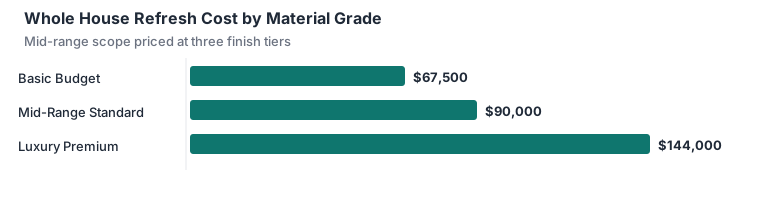
Material grade. Finish level is the single largest lever you control. Basic finishes run about 0.75x the baseline, mid-range sits at 1.0x, and luxury finishes push to roughly 1.6x. Standardize finishes across the home for a cohesive look and volume pricing, then invest selectively in the kitchen and primary suite where buyers focus.
Region & labor. Where you live changes labor rates dramatically — coastal and Northeast markets run up to 1.5x rural rates. Our regional multiplier bakes this into your estimate automatically.
Scope of work. Doing everything at once is disruptive but efficient: you pay mobilization, permits and design fees once, and trades can sequence work without repeated setup. Living elsewhere during the work speeds the schedule.
Whole House Refresh Cost by Region
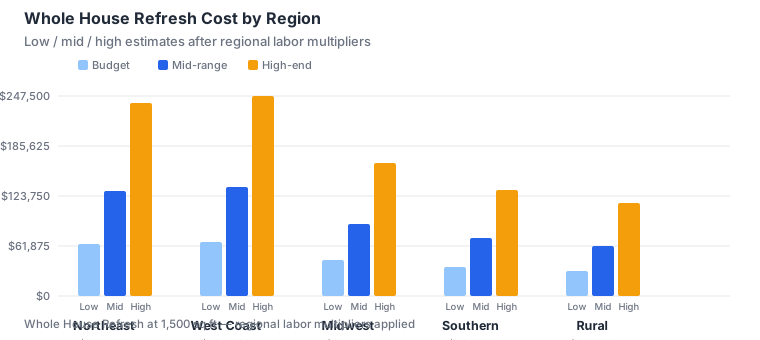
Location is one of the largest cost variables because skilled labor rates track local markets. Here's how a typical mid-range whole house refresh shifts across US regions:
| Region | Labor Multiplier | Typical Mid-Range Whole House Refresh |
|---|---|---|
| West Coast | 1.50x | $157,500 |
| Northeast | 1.45x | $152,200 |
| Midwest | 1.00x | $105,000 |
| Southern | 0.80x | $84,000 |
| Rural | 0.70x | $73,500 |
Select your state in the calculator below to apply your exact regional multiplier automatically.
Material Grades Compared
Standardize finishes across the home for a cohesive look and volume pricing, then invest selectively in the kitchen and primary suite where buyers focus. The calculator's material selector applies these multipliers so you can instantly see the budget impact of upgrading or downgrading finishes.
How Long Does a Whole House Refresh Take?
Whole-house projects run 3-6 months depending on scope, size and whether structural changes and additions are involved. Building this timeline into your plan matters if you need to arrange temporary space or coordinate with other projects.
Hidden Costs to Budget For
Beyond the obvious line items, set aside a 10-20% contingency for surprises found after demolition — outdated wiring, hidden water damage, or code upgrades triggered by opening walls. Permits typically add 2-5% of construction value, and demolition, dumpster/waste disposal and design fees are easy to forget. Our calculator includes toggles for permits, demolition, waste disposal, design fees and contingency so nothing slips through the cracks.
How to Get Accurate Whole House Refresh Quotes
The most reliable estimate comes from comparing several detailed bids against a realistic baseline. Use the calculator on this page to establish your own number first, then invite at least three licensed local contractors to quote the identical scope in writing. Insist on itemized line items — labor, materials, permits, disposal and cleanup — rather than a single lump sum, so you can compare apples to apples. Expect a 20-30% spread between honest bids; a quote far below the pack usually signals missing scope, unlicensed labor or a change-order surprise waiting to happen. A quote well above the others may include premium materials or simply reflect a busy contractor pricing to stay selective. Walking into these conversations with a data-backed figure is the single best protection against overpaying.
How to Finance a Whole House Refresh
Whole-house projects are the most common use of cash-out refinances and renovation-specific loans that lend against after-renovation value.
Homeowners generally choose among five funding routes, each suited to a different situation. A home equity line of credit (HELOC) works like a credit card against your equity and suits phased or open-ended work where the final cost is uncertain. A fixed-rate home equity loan delivers the money as a lump sum with predictable payments, ideal when the scope and price are locked. A cash-out refinance folds the cost into a new first mortgage and can make sense when today's rate beats your current one. An unsecured personal loan funds smaller jobs quickly without putting your home on the line, though at a higher rate. Paying from savings avoids interest entirely and is often the smartest choice for cosmetic-scale work. Whichever you pick, compare the total interest cost over the full term — not just the monthly payment — and borrow only what the project genuinely requires.
Common Whole House Refresh Mistakes to Avoid
- Starting without a complete design and locked scope
- Underfunding the contingency for a large, surprise-prone project
- Living in the home during heavy work and slowing the crew
- Mismatched finishes room to room
- Over-improving beyond neighborhood value
How to Save Money on a Whole House Refresh
You can cut the cost of a whole house refresh without gutting the quality of the result. The strategies below consistently deliver the biggest savings while protecting the parts of the project that matter most for daily use and resale:
- Standardize finishes across the home for volume pricing
- Lock the design before demolition to avoid change orders
- Combine all trades into one mobilization
- Invest selectively in the kitchen and primary suite
- Live elsewhere to speed the schedule
- Keep structural walls where possible
The single most effective saving is avoiding scope creep: decide what you want before demolition, get it in writing, and resist mid-project changes, which carry premium change-order pricing and stall the schedule.
DIY vs. Hiring a Pro
Owners often take on painting, cleanup and simple finish work; the structural, mechanical and permitted trades require professionals. Weigh the true cost of DIY honestly — your time, tool rental, the risk of mistakes, and the fact that some work must be permitted and inspected regardless of who performs it. For a whole house refresh, the safest split is to keep unskilled prep and finish tasks in-house while leaving licensed trades to professionals.
Questions to Ask Before Hiring a Contractor
Before you sign anything for your whole house refresh, ask each bidder: Are you licensed and insured for this work, and can I get a certificate of insurance directly from your carrier? Who pulls the permits? What is the detailed, itemized scope and payment schedule? What is the timeline and what could delay it? What warranty covers labor and materials? Can I speak with three recent clients? Never pay in full upfront — tie payments to milestones and hold the final installment until the work passes inspection.
Maintenance & Longevity
Coordinated systems upgrades (HVAC, electrical, plumbing) done together age together, simplifying future maintenance. Protecting a whole house refresh with simple, routine maintenance is far cheaper than premature repair or replacement, and it preserves the resale value the project adds.
Signs You Need a Whole House Refresh
A whole-house remodel makes sense when multiple rooms and systems are dated, or you're repositioning a home for long-term living or sale.
Does a Whole House Refresh Add Resale Value?
Comprehensive remodels recover a smaller percentage than targeted projects, but they can reposition a dated home to compete with new construction in your market. Use the ROI and added-value figures the calculator returns to weigh your project against the value it is likely to add in your local market. Remember that the highest-percentage returns come from projects that fix real problems and match neighborhood expectations, not from over-improving beyond what local buyers will pay.
Planning Your Whole House Refresh Budget Step by Step
A realistic budget follows a simple sequence. First, define the scope precisely — write down exactly what you want changed and what you will leave alone, because scope is the biggest driver of cost. Second, estimate the base cost using the calculator below, entering your real square footage, region and material grade. Third, add the line items owners forget: permits (2-5% of construction value), demolition and waste disposal, design or drawing fees, and temporary living costs if needed. Fourth, layer in a 10-20% contingency for the surprises that older homes hide behind their walls. Fifth, decide how you will pay and confirm the financing before signing a contract. Finally, collect at least three itemized written bids and benchmark them against your calculator estimate. Any bid far below the others is a warning sign, not a bargain.
How to Use This Whole House Refresh Cost Calculator
Enter your project's square footage, select your US state (which sets the regional labor multiplier), choose a material grade and work scope, then toggle the hidden-cost options that apply. The calculator instantly returns a low-to-high range, a per-square-foot figure, an estimated timeline and a resale-value projection. Adjust the inputs to compare scenarios before you request contractor bids — walking into quotes with a realistic number is the best protection against overpaying.
Frequently Asked Questions About Whole House Refresh Costs
How much does a whole-house renovation cost?
Whole-house renovation runs $30–$110 per square foot, so a 1,500 sq ft home ranges from about $45,000–$165,000 for a cosmetic refresh to the top of that range for a comprehensive renovation touching kitchens, baths, flooring, systems and layout. Structural changes and additions push costs higher still.
Is it cheaper to renovate all at once or in phases?
Doing everything at once is usually more cost-efficient: you pay mobilization, design and permit fees once, trades sequence without repeated setup, and you buy finishes at volume. Phasing spreads cash flow but repeats fixed costs and prolongs disruption.
Should I move out during a whole-house renovation?
For heavy work, yes. Living in the home during a gut renovation slows the crew, exposes your family to dust and safety hazards, and often costs more in the end. Temporary housing frequently pays for itself through a faster, smoother schedule.
How much contingency should I budget?
For a large, surprise-prone project, hold a 15-20% contingency. Older homes hide outdated wiring, failing plumbing, water damage and code-triggered upgrades behind the walls, and opening everything at once tends to reveal several of them at once.
How long does a whole-house renovation take?
Whole-house projects run 3-6 months depending on scope, size and whether structural changes or additions are involved. A complete, locked-in design before work starts is the single best way to keep the timeline and budget on track.
Does a whole-house renovation pay off?
Comprehensive remodels recover a smaller percentage than targeted projects, but they can reposition a dated home to compete with new construction in your market. The payoff is strongest when the home is significantly under-improved for its neighborhood.