How Much Does a Roof Replacement Cost?
Roof replacement is priced by roofing 'square' (100 sq ft) and by material. Asphalt shingles are the most affordable at roughly $9–$32 per square foot of roof area installed, while metal, tile and slate climb toward the top of that range for premium systems with long lifespans. The calculator further down this page lets you plug in your own square footage, material grade, region and scope for a tailored estimate — but first, here is what actually drives the number.
What's Included in a Roof Replacement Budget
Your total breaks down into several major components. Knowing the rough share each takes helps you decide where to splurge and where to save:
- Roofing material. asphalt, architectural shingle, metal, tile or slate
- Tear-off & disposal. removing old layers and hauling debris
- Underlayment & flashing. waterproofing, ice-and-water shield and metal flashing
- Decking repair. replacing rotted sheathing found after tear-off
- Labor & steepness. pitch, height and complexity change labor hours
Roof Replacement Cost by Scope
Scope has an enormous effect on price. The table below shows how a typical 2000 sq ft roof replacement moves from a budget refresh to a high-end gut rebuild:
| Scope | Per Sq Ft | Typical 2000 sq ft Project |
|---|---|---|
| Budget / cosmetic refresh | $9/sq ft | $18,000 |
| Standard remodel | $20/sq ft | $41,000 |
| High-end / full gut | $32/sq ft | $64,000 |
The Biggest Cost Factors
Project size. Cost scales with square footage, but not perfectly linearly — fixed costs like design, permits and mobilization mean smaller projects can cost more per square foot.
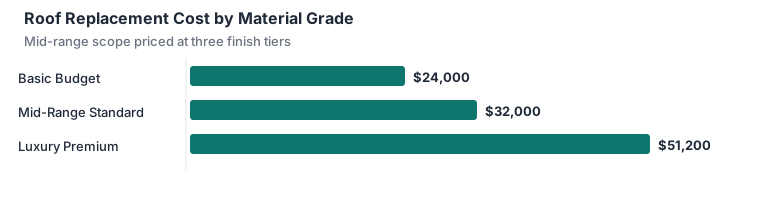
Material grade. Finish level is the single largest lever you control. Basic finishes run about 0.75x the baseline, mid-range sits at 1.0x, and luxury finishes push to roughly 1.6x. Architectural asphalt shingles balance cost and lifespan for most homes. Metal costs more upfront but lasts decades longer and can lower cooling bills in hot climates. Match material to your climate and how long you plan to stay.
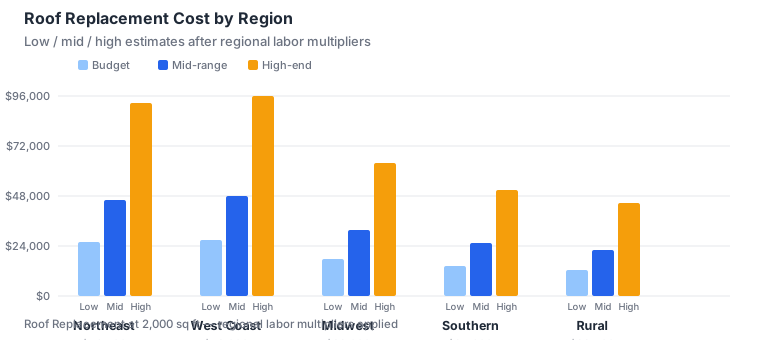
Region & labor. Where you live changes labor rates dramatically — coastal and Northeast markets run up to 1.5x rural rates. Our regional multiplier bakes this into your estimate automatically.
Scope of work. Roof pitch, number of existing layers, and the complexity of valleys, dormers and penetrations all change the price. Steep or multi-story roofs require more safety setup and labor.
Roof Replacement Cost by Region
Location is one of the largest cost variables because skilled labor rates track local markets. Here's how a typical mid-range roof replacement shifts across US regions:
| Region | Labor Multiplier | Typical Mid-Range Roof Replacement |
|---|---|---|
| West Coast | 1.50x | $61,500 |
| Northeast | 1.45x | $59,400 |
| Midwest | 1.00x | $41,000 |
| Southern | 0.80x | $32,800 |
| Rural | 0.70x | $28,700 |
Select your state in the calculator below to apply your exact regional multiplier automatically.
Material Grades Compared
Architectural asphalt shingles balance cost and lifespan for most homes. Metal costs more upfront but lasts decades longer and can lower cooling bills in hot climates. Match material to your climate and how long you plan to stay. The calculator's material selector applies these multipliers so you can instantly see the budget impact of upgrading or downgrading finishes.
How Long Does a Roof Replacement Take?
Most residential reroofs finish in 1-3 days for asphalt; metal, tile and slate take longer. Weather windows and permit approval can extend the schedule. Building this timeline into your plan matters if you need to arrange temporary space or coordinate with other projects.
Hidden Costs to Budget For
Beyond the obvious line items, set aside a 10-20% contingency for surprises found after demolition — outdated wiring, hidden water damage, or code upgrades triggered by opening walls. Permits typically add 2-5% of construction value, and demolition, dumpster/waste disposal and design fees are easy to forget. Our calculator includes toggles for permits, demolition, waste disposal, design fees and contingency so nothing slips through the cracks.
How to Get Accurate Roof Replacement Quotes
The most reliable estimate comes from comparing several detailed bids against a realistic baseline. Use the calculator on this page to establish your own number first, then invite at least three licensed local contractors to quote the identical scope in writing. Insist on itemized line items — labor, materials, permits, disposal and cleanup — rather than a single lump sum, so you can compare apples to apples. Expect a 20-30% spread between honest bids; a quote far below the pack usually signals missing scope, unlicensed labor or a change-order surprise waiting to happen. A quote well above the others may include premium materials or simply reflect a busy contractor pricing to stay selective. Walking into these conversations with a data-backed figure is the single best protection against overpaying.
How to Finance a Roof Replacement
Roof replacement is often urgent and financed with a home equity product, a personal loan, or insurance proceeds after storm damage.
Homeowners generally choose among five funding routes, each suited to a different situation. A home equity line of credit (HELOC) works like a credit card against your equity and suits phased or open-ended work where the final cost is uncertain. A fixed-rate home equity loan delivers the money as a lump sum with predictable payments, ideal when the scope and price are locked. A cash-out refinance folds the cost into a new first mortgage and can make sense when today's rate beats your current one. An unsecured personal loan funds smaller jobs quickly without putting your home on the line, though at a higher rate. Paying from savings avoids interest entirely and is often the smartest choice for cosmetic-scale work. Whichever you pick, compare the total interest cost over the full term — not just the monthly payment — and borrow only what the project genuinely requires.
Common Roof Replacement Mistakes to Avoid
- Roofing over old layers to save money and shortening the new roof's life
- Ignoring damaged decking exposed at tear-off
- Choosing the cheapest bid without checking licensing and warranty
- Overlooking proper flashing and ventilation
- Delaying replacement until leaks damage the interior
How to Save Money on a Roof Replacement
You can cut the cost of a roof replacement without gutting the quality of the result. The strategies below consistently deliver the biggest savings while protecting the parts of the project that matter most for daily use and resale:
- Get three bids and compare warranties, not just price
- Choose architectural asphalt shingles for the best cost-to-lifespan ratio
- Schedule in the off-season when roofers discount to stay busy
- Bundle gutter or skylight work while the crew is already on site
- Address decking repairs promptly to avoid larger damage
- Check for storm-damage insurance coverage before paying out of pocket
The single most effective saving is avoiding scope creep: decide what you want before demolition, get it in writing, and resist mid-project changes, which carry premium change-order pricing and stall the schedule.
DIY vs. Hiring a Pro
Roofing is dangerous height work with real leak risk — hire licensed, insured roofers rather than attempting DIY. Weigh the true cost of DIY honestly — your time, tool rental, the risk of mistakes, and the fact that some work must be permitted and inspected regardless of who performs it. For a roof replacement, the safest split is to keep unskilled prep and finish tasks in-house while leaving licensed trades to professionals.
Questions to Ask Before Hiring a Contractor
Before you sign anything for your roof replacement, ask each bidder: Are you licensed and insured for this work, and can I get a certificate of insurance directly from your carrier? Who pulls the permits? What is the detailed, itemized scope and payment schedule? What is the timeline and what could delay it? What warranty covers labor and materials? Can I speak with three recent clients? Never pay in full upfront — tie payments to milestones and hold the final installment until the work passes inspection.
Maintenance & Longevity
Clear debris, keep gutters flowing, and inspect after major storms; catching small issues early extends roof life significantly. Protecting a roof replacement with simple, routine maintenance is far cheaper than premature repair or replacement, and it preserves the resale value the project adds.
Signs You Need a Roof Replacement
Replace when shingles are curling or missing, granules fill the gutters, the roof is near end of life, or leaks appear.
Does a Roof Replacement Add Resale Value?
A new roof rarely 'wows' buyers, but an old or failing roof kills deals. Replacement protects the home and removes a major objection at sale, recovering a meaningful share of cost. Use the ROI and added-value figures the calculator returns to weigh your project against the value it is likely to add in your local market. Remember that the highest-percentage returns come from projects that fix real problems and match neighborhood expectations, not from over-improving beyond what local buyers will pay.
Planning Your Roof Replacement Budget Step by Step
A realistic budget follows a simple sequence. First, define the scope precisely — write down exactly what you want changed and what you will leave alone, because scope is the biggest driver of cost. Second, estimate the base cost using the calculator below, entering your real square footage, region and material grade. Third, add the line items owners forget: permits (2-5% of construction value), demolition and waste disposal, design or drawing fees, and temporary living costs if needed. Fourth, layer in a 10-20% contingency for the surprises that older homes hide behind their walls. Fifth, decide how you will pay and confirm the financing before signing a contract. Finally, collect at least three itemized written bids and benchmark them against your calculator estimate. Any bid far below the others is a warning sign, not a bargain.
How to Use This Roof Replacement Cost Calculator
Enter your project's square footage, select your US state (which sets the regional labor multiplier), choose a material grade and work scope, then toggle the hidden-cost options that apply. The calculator instantly returns a low-to-high range, a per-square-foot figure, an estimated timeline and a resale-value projection. Adjust the inputs to compare scenarios before you request contractor bids — walking into quotes with a realistic number is the best protection against overpaying.
Frequently Asked Questions About Roof Replacement Costs
How much does a new roof cost?
A typical asphalt-shingle reroof runs $18,000–$64,000 for an average home, while metal, tile and slate reach the top of that range. Price is driven by roof size (measured in 100 sq ft 'squares'), material, pitch, the number of existing layers and the complexity of valleys and penetrations.
How long does a roof last?
Asphalt architectural shingles last 25-30 years, metal roofs 40-70 years, and tile or slate 50-100 years. Actual lifespan depends heavily on climate, ventilation and installation quality, which is why hiring a licensed, insured roofer matters more than shaving a few dollars off the bid.
Can you put a new roof over an old one?
Roofing over one existing layer is allowed in many areas and saves on tear-off labor, but it hides deck problems, adds weight, and shortens the new roof's life. A full tear-off lets the crew inspect and repair the decking and almost always delivers a longer-lasting result.
Do I need a permit to replace a roof?
Most jurisdictions now require a permit for a full roof replacement, and an inspection may be required after tear-off and at completion. Your roofer typically pulls the permit; confirm this is included in the bid so you aren't left with an unpermitted roof at resale.
How long does a roof replacement take?
Most asphalt reroofs finish in 1-3 days; metal, tile and slate take longer. Weather windows, roof complexity and decking repairs can extend the schedule. A reputable contractor will protect landscaping and complete a thorough nail sweep afterward.
Does a new roof add home value?
A new roof rarely excites buyers, but an old or failing roof kills deals and lowers appraisals. Replacement removes a major objection, can lower insurance premiums, and recovers a meaningful share of its cost — especially when the old roof is at end of life.