Renovation Cost & Timeline at a Glance
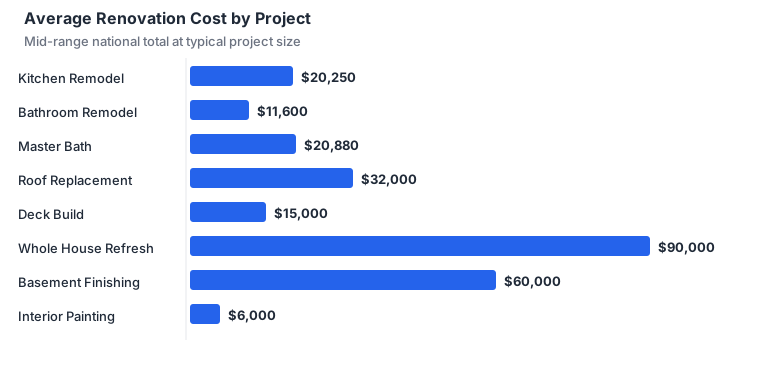
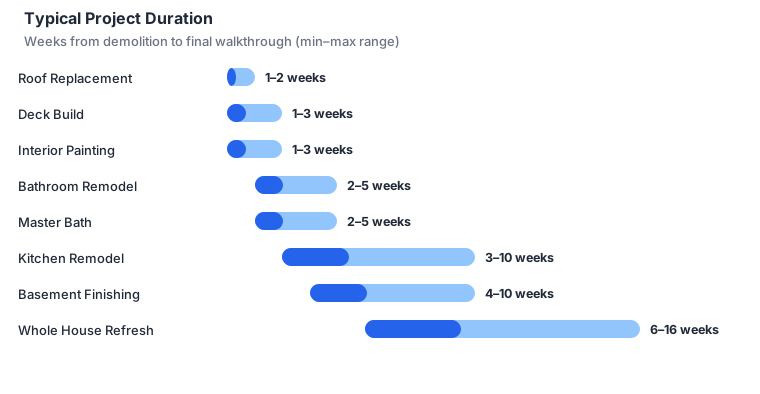
Two reference charts for the questions we get most often: what projects cost, and how long they take.
Answers to the most common questions about US home remodeling budgets, labor rates and material costs.
Last updated:
Two reference charts for the questions we get most often: what projects cost, and how long they take.
National average kitchen remodel pricing ranges from $65 per sq ft for light cosmetic refreshes up to $220 per sq ft for full gut rebuilds with new plumbing and electrical. Mid-range standard kitchen remodels average $135 per square foot across the United States, with coastal regions carrying a 45-50% labor markup on all materials and installation work.
Basic cosmetic bathroom updates cost roughly $70 per sq ft, mid-range full fixture replacement runs $145 per sq ft, and complete gut bathroom remodels with shower/tub rework hit $240 per square foot. Master bathrooms with dual vanities and walk-in showers add an extra 20% to baseline pricing compared to small guest bathrooms.
Northeast and West Coast metro areas apply a 1.45-1.5x labor cost multiplier, Midwest uses baseline 1.0x pricing, Southern suburban zones drop to 0.8x, and rural low-population regions average just 0.7x national labor costs. Labor typically accounts for 40-60% of your full renovation budget depending on project complexity. The U.S. Bureau of Labor Statistics tracks the national construction labor costs that drive these multipliers.
Basic budget finishes include laminate countertops, vinyl flooring and stock builder-grade cabinetry (0.75x cost multiplier). Mid-range standard uses solid wood cabinets, ceramic tile and brand-name mid-tier appliances (1.0x baseline). Luxury premium upgrades feature natural stone countertops, custom millwork and high-end designer fixtures with a 1.6x total cost increase.
Contingency funds cover hidden unexpected damage uncovered after demolition, such as rotted framing, mold, outdated wiring or leaky pipes hidden behind walls. Newer homes only require a 10% reserve, while older houses built before 1980 need a 15-20% buffer to avoid major budget overruns mid-project.
Most cities require construction permits for kitchen, bathroom, roof and structural deck remodels, averaging 4% of your total base project cost. Small cosmetic paint-only jobs usually skip permit requirements, but skipping mandatory permits can create legal issues when selling your home later.
Complete gut demolition including wall tear-out, fixture removal and waste hauling adds approximately 12% to your core material and labor budget. Partial remodels that retain existing walls, plumbing and cabinetry eliminate nearly all demolition surcharges and cut overall project expenses significantly.
Common overlooked costs include city inspection permits, construction waste disposal hauling fees, architect design consultation charges, temporary rental housing during long full-home remodels, and electrical/plumbing panel upgrades required to meet modern building codes after demolition.
Room-by-room remodels lower upfront cash outlay but raise total long-term costs due to repeated contractor mobilization fees and duplicate permit charges. Bundling multiple renovation phases in one single contract cuts overhead waste by roughly 10-15% overall for homeowners with flexible budgets.
Standard asphalt shingle roof replacements average $9 per sq ft for basic material grades, mid-range architectural shingles run $16 per sq ft, and luxury metal or slate roof systems reach $32 per square foot. Steep roof pitches add an additional labor surcharge of 15-25%.
Pressure-treated lumber decks start at $28 per sq ft, composite low-maintenance decking hits $50 per sq ft, and custom luxury hardwood deck builds cost $85 per sq ft. Extra cost drivers include built-in seating, outdoor kitchens, multi-level framing and required city structural permits for elevated decks over 3 feet tall.
Basement finishing averages $50-180 per sq ft, higher than standard upstairs room renovations due to mandatory moisture barrier installation, drainage systems, egress window code requirements and specialized waterproofing labor that upper floor remodels never need.
Professional architect and interior design consultation fees average 6% of your total core renovation budget. Complex structural additions, custom kitchen layouts and full-home gut remodels often push design charges up to 8-10% of your overall project total.
Interior cosmetic paint refreshes are the lowest-cost major home improvement project, averaging just $3 to $8 per square foot depending on wall repair prep work and premium paint brand selections. Painting requires zero demolition or structural permits for most single-family US homes.
Coastal metro zones on the Northeast and West Coast face higher skilled contractor hourly wages, stricter building safety regulations, increased material shipping costs and limited local construction labor pools, combining to create a nearly 50% markup on all renovation labor compared to rural Southern and Midwest markets.
Homeowners can cut roughly 8-12% of total project costs by completing non-structural DIY demolition like cabinet and fixture removal. Avoid DIY wall tear-out, electrical disconnect and plumbing removal without professional training; hidden utility lines create safety hazards and costly repair mistakes.
Light cosmetic kitchen refreshes finish in 3-7 business days, mid-range fixture and cabinet replacement remodels take 2-4 weeks, and full gut kitchen rebuilds with plumbing/electrical rework require 6-10 weeks of active construction time plus permit waiting periods before work begins.
Kitchen and bathroom remodels deliver the highest resale ROI in the US, recovering 60-75% of total construction costs at sale time. Roof replacement and deck builds return 50-65% of investment, while full luxury whole-house renovations rarely recoup more than 40% of upfront spending.
Nationwide US renovation averages split 40-60% labor cost and 40-60% material cost depending on project type. Simple paint jobs lean heavily to labor (65% labor), while full kitchen gut remodels balance evenly at roughly 50% labor and 50% cabinet/appliance material expenses.
This calculator delivers realistic national average budget estimates based on current US construction market pricing, regional labor multipliers and material grade tiers. It cannot account for unique local contractor bids, sudden lumber price spikes or unseen structural damage uncovered mid-demolition; always collect 2-3 professional local quotes for final project budgeting.
Spring and fall are ideal for most renovation projects due to mild weather and contractor availability. Winter is the best time to negotiate lower labor rates, as demand drops 20-30%. Avoid starting major exterior work during rainy season or deep winter in northern states.
Foundation capacity depends on soil type, foundation depth, and current load. A structural engineer must evaluate whether your foundation can support additional weight. Costs for evaluation run $500-1,500, and foundation reinforcement (if needed) adds $10,000-30,000 to your project.
For full gut renovations lasting more than 4 weeks, temporary housing is strongly recommended. Dust, noise, and lack of working kitchen/bathroom make daily life extremely difficult. Budget $1,500-3,000/month for rental costs during the renovation period.
Adding a new bathroom costs $15,000-35,000 including plumbing rough-in, fixtures, tile, and finishing. Costs rise to $45,000+ if you need to add a new sewer line or upgrade your septic system. Luxury finishes can push the total above $60,000.
Attic conversions average $50-150 per sq ft depending on whether you need structural reinforcement, stair installation, and HVAC extension. Building a proper staircase (required by code) adds $2,000-5,000. Ceiling height and egress window requirements also impact total cost.
Pre-wiring for smart home features during renovation costs 80% less than retrofitting later. Budget $200-500 per room for pre-wiring Ethernet, smart switches, and sensor locations. Smart panel upgrades (electrical) add $1,500-3,000 but increase home value and appeal to younger buyers.
Home improvement costs are not tax-deductible for personal residences, but they do increase your cost basis (reducing capital gains tax when you sell). Medical-necessity renovations (walk-in shower for mobility, wheelchair ramp) may be deductible. Home office renovations can be partially deducted. Always consult a tax professional. The IRS home energy tax credit guide (Form 5695) explains which energy-efficient upgrades qualify.
Installing central AC during a remodel (when walls are open) costs $3,500-7,500 for a 1,500 sq ft home. Waiting until after walls are closed adds 30-50% in labor costs because ductwork becomes much harder to install. Mini-split systems cost $3,000-5,000 for multi-zone coverage as an alternative.
For rental properties, the highest ROI renovations are kitchen updates (recoup 70-80%), bathroom refreshes (65-75%), and exterior curb appeal improvements (60-70%). Avoid luxury finishes in rentals — use mid-grade, durable materials that withstand tenant wear and tear.
Homes built before 1978 may contain lead paint; those built before 1980 may have asbestos in flooring, insulation, or siding. Professional abatement costs $10-25 per sq ft for lead paint, $15-30 per sq ft for asbestos. Skipping proper abatement creates major legal and health risks.
Replacing HVAC during a remodel (when ducts are accessible) costs $7,000-12,000 for a 2,000 sq ft home. High-efficiency units (SEER 16+) add $2,000-4,000 premium but save $300-600/year in energy costs. Zoned HVAC systems add $2,500-5,000 for multi-level homes.
Cabinet refacing costs $4,000-9,000 for an average kitchen and takes 3-5 days. Full cabinet replacement costs $12,000-30,000 and takes 2-4 weeks. Refacing makes sense if cabinet boxes are solid wood and layout is staying the same.
Common hidden issues include rotted subflooring ($8-15/sq ft to replace), termite damage ($1,000-3,000 to treat and repair), outdated electrical panels ($1,500-3,000 to upgrade), and plumbing galvanized pipe replacement ($2,000-5,000). A pre-renovation inspection ($400-800) helps identify these before demolition begins.
ADA accessibility modifications cost $5,000-25,000 depending on scope. Widening doorways to 36 inches: $500-1,500 per door. Walk-in shower installation: $3,000-8,000. Accessibility ramp: $1,500-4,000. Stair lift: $3,000-5,000. Many of these costs may be tax-deductible as medical expenses. Homeowners with limited income may also qualify for HUD home repair assistance programs.
In 2026, quartz costs $55-120 per sq ft installed, while granite runs $45-100 per sq ft installed. Quartz is marginally more expensive but offers superior stain resistance and requires no sealing. Granite offers a unique natural look but needs resealing every 1-2 years. Both materials offer similar ROI at resale.
Never pay more than 10% upfront (some states legally cap it at 10%). Then tie payments to completed milestones: frame complete, rough-in complete, etc. Retain 10-15% until final inspection and all lien waivers are signed. Never pay in full before the job is 100% complete.
LVP installation costs $3-8 per sq ft including materials and labor. LVP is waterproof, durable, and much cheaper than hardwood ($8-15/sq ft) or tile ($10-20/sq ft). It can be installed over most existing floors, saving $1-2 per sq ft in demolition costs.
A new kitchen island with electrical and plumbing costs $3,000-8,000 including installation. The biggest cost drivers are running new electrical ($500-1,500) and extending plumbing for a sink or dishwasher ($1,000-3,000). Prefab islands cost 40-60% less than custom-built.
Laundry room remodeling averages $6,000-15,000 depending on whether you are moving plumbing, adding cabinetry, or installing soundproofing. Stacking washer/dryer saves space and costs $500-1,500 for stacking kits and modifications. Utility sink installation adds $400-800.
Require all contractors to use the same detailed scope of work document. Compare: exact material brands/models, warranty terms, cleanup/hauling inclusion, permit handling, and lien waiver provision. The lowest bid often excludes critical items. A line-by-line comparison spreadsheet prevents surprise costs mid-project.
Luxury Vinyl Plank (LVP) at $3-8 per sq ft installed is the best budget-friendly flooring with excellent waterproofing and durability. Laminate ($2-5/sq ft) is cheaper but less water-resistant. Ceramic tile ($5-12/sq ft) offers the best long-term value for bathrooms and kitchens.
A new front door installation costs $500-2,500 including the door, frame, and hardware. Steel doors ($500-1,200) offer the best ROI at 75-90%. Fiberglass doors ($800-2,500) look like wood without the maintenance. Solid wood doors ($1,000-2,500) offer premium looks but require regular maintenance.
Recessed lighting installation costs $150-350 per fixture when walls are open during renovation. Adding recessed lighting after walls are closed costs $300-600 per fixture because electricians must cut and patch drywall. LED recessed fixtures add $50-100 per fixture but last 20+ years.
Soundproofing a room costs $1,500-4,000 depending on wall construction. Adding rockwool insulation and double drywall with isolation clips: $1,500-3,000 per room. Replacing hollow-core doors with solid-core: $300-800 per door. Soundproofing windows: $500-1,500 per window.
Tankless water heater installation costs $2,500-5,000 including unit and labor. Gas tankless units cost more upfront but save $100-200/year in energy costs vs. electric. Electrical panel upgrades (if needed for electric tankless) add $1,500-3,000 to the project.
Adding a mudroom costs $15,000-35,000 including foundation, framing, roofing, and finishes. Converting an existing garage or porch into a mudroom costs $8,000-20,000. Built-in cubbies, bench seating, and closet systems add $2,000-5,000 to the total.
Whole-house water filtration installation costs $1,500-4,000 including the filtration unit and professional plumbing integration. Under-sink reverse osmosis systems cost $300-800 installed. Whole-house systems add $5-10/month in filter replacement costs but eliminate bottled water expenses.
Window replacement costs $450-1,200 per window including installation. Vinyl windows ($450-750/window) offer the best value and energy efficiency. Wood windows ($800-1,200/window) look premium but need regular maintenance. Fiberglass windows ($600-1,000/window) are the most durable option for extreme climates.
Engineered hardwood costs $6-12 per sq ft installed and is more stable in humid or basement environments. Solid hardwood costs $8-15 per sq ft installed and can be refinished 3-5 times. For renovation ROI, engineered wood offers 70-80% recovery vs. 60-75% for solid hardwood due to lower upfront cost.
Gas fireplace installation costs $3,000-6,000 including venting and finishing. Wood-burning fireplace insert: $2,000-5,000 installed. Electric fireplace (no venting needed): $1,000-3,000. Outdoor fireplace for deck/patio: $5,000-15,000. ROI on fireplace addition is 60-75% at resale.
Adding a half-bath (toilet + sink only) costs $8,000-15,000 including plumbing and finishing. Adding a shower (full 3-piece bath) costs $15,000-25,000. Main-floor half-baths recover 80-90% of cost at resale — the highest ROI of any home addition.
Home elevator installation costs $25,000-50,000 including shaft construction, electrical, and finishing. Hydraulic elevators cost less upfront ($25,000-35,000) but need more maintenance. Cable-driven elevators ($35,000-50,000) are quieter and more reliable. Most US homes need a 6x6 ft shaft minimum.
Walk-in closet remodeling costs $2,000-8,000 depending on whether you add built-in systems, lighting, and finishes. Custom closet systems (California Closets type) cost $2,000-5,000 for a standard walk-in. Adding closet lighting and ventilation: $300-800 extra.
Concrete driveway installation costs $5-10 per sq ft (including demolition of old driveway). Paver driveways cost $10-20 per sq ft installed. Stamped concrete (decorative) adds $3-8 per sq ft premium. Engineering a new driveway for proper drainage: $1,000-3,000 extra.
French drain installation costs $10-25 per linear foot including trenching, gravel, and pipe. Exterior foundation waterproofing with drainage: $80-120 per linear foot. Proper drainage prevents basement flooding and foundation damage — a critical but often overlooked renovation expense.
Sunroom addition costs $15,000-50,000 depending on whether you use a prefab kit vs. custom build. Three-season rooms (no HVAC) cost $15,000-30,000. Four-season rooms with HVAC integration cost $30,000-50,000. ROI on sunroom addition is 45-55% at resale.
Whole-house generator installation costs $7,000-15,000 including the unit, transfer switch, and electrical integration. Portable generator with transfer switch: $2,000-5,000. Standby generators (permanently installed) add $3,000-5,000 in electrical panel upgrades but provide seamless backup power during outages.
Sliding glass door installation costs $1,500-4,000 including the door, frame, and hardware. French doors (hinged) cost $1,200-3,500 installed. Folding/accordion patio doors cost $5,000-12,000 installed. Impact-rated doors (hurricane zones) add 30-50% premium.
Home office remodeling costs $20-80 per sq ft depending on electrical upgrades, built-in cabinetry, and soundproofing. Adding dedicated 20A circuits for computer equipment: $300-800. Built-in desk and storage: $2,000-6,000. Soundproofing: $1,500-4,000 extra. Home office renovations have 50-60% ROI as remote work remains popular.