How Much Does a Kitchen Remodel Cost?
A kitchen remodel is the single most popular US home-improvement project, and also one of the most variable in price. A light cosmetic refresh — new paint, hardware, a countertop and appliances — can land around $65 per square foot, while a full gut renovation with custom cabinetry, relocated plumbing and high-end appliances can exceed $220 per square foot. The calculator further down this page lets you plug in your own square footage, material grade, region and scope for a tailored estimate — but first, here is what actually drives the number.
What's Included in a Kitchen Remodel Budget
Your total breaks down into several major components. Knowing the rough share each takes helps you decide where to splurge and where to save:
- Cabinetry. 30-40% of the budget; stock, semi-custom and custom tiers vary 3-4x in price
- Countertops. laminate to quartz to natural stone spans a wide range per square foot
- Appliances. entry-level packages to professional-grade suites
- Labor. demolition, plumbing, electrical, install and finishing
- Flooring & backsplash. tile, LVP or hardwood plus wall finishes
Kitchen Remodel Cost by Scope
Scope has an enormous effect on price. The table below shows how a typical 150 sq ft kitchen remodel moves from a budget refresh to a high-end gut rebuild:
| Scope | Per Sq Ft | Typical 150 sq ft Project |
|---|---|---|
| Budget / cosmetic refresh | $65/sq ft | $9,800 |
| Standard remodel | $142/sq ft | $21,400 |
| High-end / full gut | $220/sq ft | $33,000 |
The Biggest Cost Factors
Project size. Cost scales with square footage, but not perfectly linearly — fixed costs like design, permits and mobilization mean smaller projects can cost more per square foot.
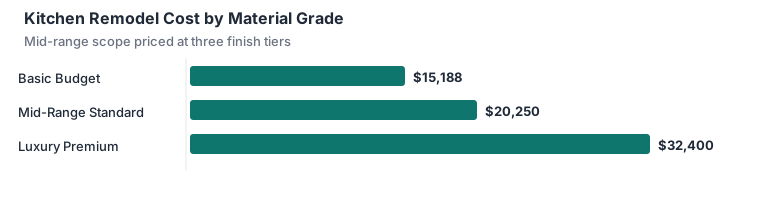
Material grade. Finish level is the single largest lever you control. Basic finishes run about 0.75x the baseline, mid-range sits at 1.0x, and luxury finishes push to roughly 1.6x. Cabinets set the tone: stock cabinets are budget-friendly and fast, semi-custom balance cost and choice, and custom cabinets maximize fit and finish at a premium. Pair the splurge (cabinets or countertops you touch daily) with mid-range choices on backsplash and flooring to control cost.
Region & labor. Where you live changes labor rates dramatically — coastal and Northeast markets run up to 1.5x rural rates. Our regional multiplier bakes this into your estimate automatically.
Scope of work. Layout changes are the biggest hidden multiplier. Keeping sinks, ranges and refrigerators in their existing positions avoids costly plumbing, gas and electrical reroutes. Moving an island with a sink or adding a range hood run to an exterior wall can add thousands on its own.
Kitchen Remodel Cost by Region
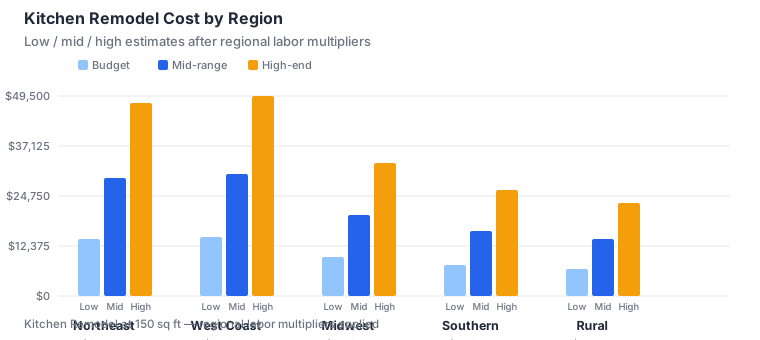
Location is one of the largest cost variables because skilled labor rates track local markets. Here's how a typical mid-range kitchen remodel shifts across US regions:
| Region | Labor Multiplier | Typical Mid-Range Kitchen Remodel |
|---|---|---|
| West Coast | 1.50x | $32,100 |
| Northeast | 1.45x | $31,000 |
| Midwest | 1.00x | $21,400 |
| Southern | 0.80x | $17,100 |
| Rural | 0.70x | $15,000 |
Select your state in the calculator below to apply your exact regional multiplier automatically.
Material Grades Compared
Cabinets set the tone: stock cabinets are budget-friendly and fast, semi-custom balance cost and choice, and custom cabinets maximize fit and finish at a premium. Pair the splurge (cabinets or countertops you touch daily) with mid-range choices on backsplash and flooring to control cost. The calculator's material selector applies these multipliers so you can instantly see the budget impact of upgrading or downgrading finishes.
How Long Does a Kitchen Remodel Take?
A cosmetic kitchen refresh takes 1-3 weeks. A standard remodel runs 4-8 weeks. A full gut with layout changes and custom cabinetry can take 10-12 weeks, plus lead time for cabinet manufacturing and permit approval. Building this timeline into your plan matters if you need to arrange temporary space or coordinate with other projects.
Hidden Costs to Budget For
Beyond the obvious line items, set aside a 10-20% contingency for surprises found after demolition — outdated wiring, hidden water damage, or code upgrades triggered by opening walls. Permits typically add 2-5% of construction value, and demolition, dumpster/waste disposal and design fees are easy to forget. Our calculator includes toggles for permits, demolition, waste disposal, design fees and contingency so nothing slips through the cracks.
How to Get Accurate Kitchen Remodel Quotes
The most reliable estimate comes from comparing several detailed bids against a realistic baseline. Use the calculator on this page to establish your own number first, then invite at least three licensed local contractors to quote the identical scope in writing. Insist on itemized line items — labor, materials, permits, disposal and cleanup — rather than a single lump sum, so you can compare apples to apples. Expect a 20-30% spread between honest bids; a quote far below the pack usually signals missing scope, unlicensed labor or a change-order surprise waiting to happen. A quote well above the others may include premium materials or simply reflect a busy contractor pricing to stay selective. Walking into these conversations with a data-backed figure is the single best protection against overpaying.
How to Finance a Kitchen Remodel
Kitchen remodels are commonly financed with a HELOC or home equity loan given their size and strong resale return; smaller cosmetic refreshes can often be paid from savings.
Homeowners generally choose among five funding routes, each suited to a different situation. A home equity line of credit (HELOC) works like a credit card against your equity and suits phased or open-ended work where the final cost is uncertain. A fixed-rate home equity loan delivers the money as a lump sum with predictable payments, ideal when the scope and price are locked. A cash-out refinance folds the cost into a new first mortgage and can make sense when today's rate beats your current one. An unsecured personal loan funds smaller jobs quickly without putting your home on the line, though at a higher rate. Paying from savings avoids interest entirely and is often the smartest choice for cosmetic-scale work. Whichever you pick, compare the total interest cost over the full term — not just the monthly payment — and borrow only what the project genuinely requires.
Common Kitchen Remodel Mistakes to Avoid
- Moving the sink, range or refrigerator when the existing layout works fine
- Choosing cabinets last instead of first (they set the budget and lead time)
- Under-sizing the electrical for modern appliances
- Forgetting ventilation and adequate task lighting
- Skipping a backsplash-to-counter template review before ordering
How to Save Money on a Kitchen Remodel
You can cut the cost of a kitchen remodel without gutting the quality of the result. The strategies below consistently deliver the biggest savings while protecting the parts of the project that matter most for daily use and resale:
- Reface or repaint existing cabinets instead of replacing the boxes
- Keep sinks, ranges and refrigerators in their current positions
- Choose quartz or a quality laminate over natural stone
- Mix a splurge item (cabinets) with mid-range backsplash and flooring
- Buy appliances during holiday sales and order cabinets early to avoid rush fees
- Do your own demolition and painting if you are handy
The single most effective saving is avoiding scope creep: decide what you want before demolition, get it in writing, and resist mid-project changes, which carry premium change-order pricing and stall the schedule.
DIY vs. Hiring a Pro
Homeowners can often handle demolition, painting and hardware installation, but cabinetry alignment, plumbing, gas and electrical should go to licensed pros. Weigh the true cost of DIY honestly — your time, tool rental, the risk of mistakes, and the fact that some work must be permitted and inspected regardless of who performs it. For a kitchen remodel, the safest split is to keep unskilled prep and finish tasks in-house while leaving licensed trades to professionals.
Questions to Ask Before Hiring a Contractor
Before you sign anything for your kitchen remodel, ask each bidder: Are you licensed and insured for this work, and can I get a certificate of insurance directly from your carrier? Who pulls the permits? What is the detailed, itemized scope and payment schedule? What is the timeline and what could delay it? What warranty covers labor and materials? Can I speak with three recent clients? Never pay in full upfront — tie payments to milestones and hold the final installment until the work passes inspection.
Maintenance & Longevity
Quality cabinets and quartz counters last 20+ years with basic care; sealing natural stone and maintaining caulk lines protects the investment. Protecting a kitchen remodel with simple, routine maintenance is far cheaper than premature repair or replacement, and it preserves the resale value the project adds.
Signs You Need a Kitchen Remodel
Consider a kitchen remodel when layout bottlenecks slow daily use, cabinets are failing, or a dated kitchen is dragging down your home's appeal.
Does a Kitchen Remodel Add Resale Value?
Minor kitchen remodels are consistently among the highest-ROI projects, often recovering around 70-75% of their cost, while upscale major remodels recover less. Buyers notice kitchens first, so a clean, functional update that matches your neighborhood pays off. Use the ROI and added-value figures the calculator returns to weigh your project against the value it is likely to add in your local market. Remember that the highest-percentage returns come from projects that fix real problems and match neighborhood expectations, not from over-improving beyond what local buyers will pay.
Planning Your Kitchen Remodel Budget Step by Step
A realistic budget follows a simple sequence. First, define the scope precisely — write down exactly what you want changed and what you will leave alone, because scope is the biggest driver of cost. Second, estimate the base cost using the calculator below, entering your real square footage, region and material grade. Third, add the line items owners forget: permits (2-5% of construction value), demolition and waste disposal, design or drawing fees, and temporary living costs if needed. Fourth, layer in a 10-20% contingency for the surprises that older homes hide behind their walls. Fifth, decide how you will pay and confirm the financing before signing a contract. Finally, collect at least three itemized written bids and benchmark them against your calculator estimate. Any bid far below the others is a warning sign, not a bargain.
How to Use This Kitchen Remodel Cost Calculator
Enter your project's square footage, select your US state (which sets the regional labor multiplier), choose a material grade and work scope, then toggle the hidden-cost options that apply. The calculator instantly returns a low-to-high range, a per-square-foot figure, an estimated timeline and a resale-value projection. Adjust the inputs to compare scenarios before you request contractor bids — walking into quotes with a realistic number is the best protection against overpaying.
Frequently Asked Questions About Kitchen Remodel Costs
How much does a small kitchen remodel cost?
A small (roughly 70-100 sq ft) kitchen remodel typically runs $8,000-$25,000 depending on finishes. Keeping the existing layout, choosing stock or semi-custom cabinets and quartz-look surfaces keeps you at the lower end; custom cabinetry, relocated plumbing and premium appliances push toward the top.
What is the most expensive part of a kitchen remodel?
Cabinetry is almost always the largest single line item, absorbing 30-40% of the budget. Labor is the next biggest cost, followed by countertops and appliances. Because cabinets set both the price and the lead time, choose them first, not last.
Can I remodel a kitchen for $10,000?
Yes, with a cosmetic focus. Refacing or repainting existing cabinets, swapping hardware and faucets, installing a new countertop and backsplash, and updating lighting can transform a kitchen for around $10,000 as long as you keep the layout and avoid moving plumbing or gas lines.
Do I need a permit to remodel a kitchen?
A permit is usually required once you touch electrical, plumbing, gas or structural elements — which most full remodels do. Cosmetic-only work like paint, hardware and countertops often does not. Check with your local building department, because unpermitted work can stall a future sale.
How long does a kitchen remodel take?
A cosmetic refresh takes 1-3 weeks, a standard remodel 4-8 weeks, and a full gut with custom cabinetry and layout changes 10-12 weeks — plus several weeks of cabinet lead time before demolition even begins. Order materials early to avoid mid-project stalls.
Is a kitchen remodel worth it for resale?
A minor, midrange kitchen remodel is one of the most reliable ROI projects, typically recovering around 70-75% of its cost, because buyers judge kitchens first. Over-improving beyond your neighborhood's price ceiling is where owners lose money, so match the finish level to comparable local homes.