15 Ways to Save Money on Your Home Remodel Without Cutting Corners
15 practical, proven ways to reduce home renovation costs in 2026 without sacrificing quality — from timing and material swaps to smart scope decisions.
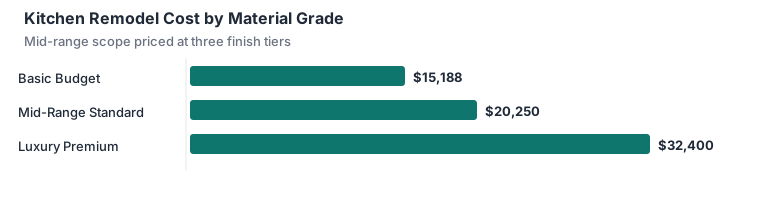
Saving money on a remodel is not about buying the cheapest everything — that path leads to work you redo in five years. Real savings come from smart decisions that lower cost without lowering quality or durability. Here are fifteen strategies that experienced renovators use to stretch a budget while keeping standards high.
1. Keep the Existing Layout
The single biggest cost you control is whether you move plumbing, gas and load-bearing walls. Keeping sinks, toilets, ranges and structural elements where they are can save thousands. A kitchen that reuses existing plumbing rough-ins costs dramatically less than one that relocates the sink and adds an island with water. Reserve layout changes for cases where the current arrangement is genuinely dysfunctional.
2. Time Your Project for the Off-Season
Contractors are busiest in spring and summer. Booking a project in late fall or winter — when crews have gaps to fill — can earn better pricing and faster scheduling. Interior work like kitchens, baths and basements is largely weather-independent, making the slow season a genuine opportunity. Ask contractors directly whether they offer better rates for off-peak scheduling.
3. Mix Material Grades Strategically
You do not need luxury everything. Splurge on the surfaces you touch and see most — countertops, the shower, cabinet fronts — and choose quality mid-range options for backsplashes, secondary flooring and trim. Buyers and guests rarely notice a mid-range backsplash paired with a beautiful counter, but they always notice a cohesive, well-finished space.
4. Refinish or Reface Instead of Replace
Solid-wood cabinets in good structural shape can be refinished or refaced for a fraction of replacement cost. Hardwood floors can be sanded and refinished rather than torn out. A bathtub can be reglazed instead of replaced. When the bones are good, restoration beats replacement on both cost and waste.
5. Buy Your Own Fixtures and Finishes
Contractors often mark up materials they supply. For finish items with clear specifications — faucets, light fixtures, hardware, sometimes tile — buying them yourself during sales can save the markup, as long as you coordinate carefully so the right items arrive on time. Discuss this with your contractor first; some prefer to control materials for warranty reasons.
6. Get At Least Three Detailed Bids
Prices for identical work vary widely. Three written, itemized bids typically reveal a 20-30% spread and give you leverage. Make sure each bid covers the same scope, materials and finish level; otherwise you are comparing different projects. The goal is not simply the lowest number but the best value from a contractor you trust.
7. Do the Demolition Yourself (Carefully)
Demolition is labor you can sometimes handle yourself — removing old cabinets, tearing up flooring, clearing a room. This can save on labor hours, but only attempt it where there is no risk to plumbing, wiring, gas or structure. When in doubt, leave demolition to the pros; a burst pipe or nicked wire erases any savings instantly.
8. Reuse and Repurpose
Old cabinets can move to the garage or basement. Appliances in good condition can be sold or relocated. Salvaged materials — a reclaimed mantel, vintage fixtures — add character at low cost. Habitat for Humanity ReStores and architectural salvage yards are goldmines for unique, affordable finds.
9. Improve Efficiency to Lower Long-Term Costs
Some upgrades pay for themselves. Better insulation, efficient windows, LED lighting and high-efficiency HVAC lower monthly bills for years. Many utilities and governments offer rebates and tax credits for energy-efficient improvements, effectively discounting the upgrade. Factor these incentives in — they can meaningfully change the math on windows, insulation and heat pumps.
10. Phase the Project
If the full scope is out of reach, break it into phases you can fund over time. Complete the highest-value, most-needed work first, and schedule the rest for later. Phasing costs a little more overall due to repeated mobilization, but it lets you avoid debt and pay as you go — often the wiser financial choice.
11. Avoid Change Orders
Every mid-project change costs money and time, and change-order pricing is rarely in your favor. Finalize your design, selections and scope before work begins. Walk the plan with your contractor, confirm every material, and resist the urge to "just add one thing." Discipline here protects both budget and timeline.
12. Choose Stock and Semi-Custom Over Custom
Custom cabinetry and built-ins carry a steep premium. Stock and semi-custom lines have expanded dramatically in style and quality, offering most of the look for a fraction of the price. Unless your space has unusual dimensions, semi-custom usually delivers the best balance of fit, finish and cost.
13. Bundle Related Projects
Doing a kitchen and adjacent flooring together, or two bathrooms at once, spreads mobilization, permit and design costs across more work. Trades are already on site, so incremental jobs cost less than standalone visits. If two projects are on your list, combining them often lowers the per-project cost.
14. Handle Your Own Cleanup and Painting
Finish-level tasks like painting, simple landscaping restoration and final cleanup are within reach of most homeowners. Taking these on trims billable hours. Painting in particular offers a high return on your own effort — it is forgiving, low-risk and dramatically changes a space.
15. Know When Not to Save
The final rule is the most important: some things are worth paying for. Never cut corners on waterproofing, structural work, electrical safety, roofing or foundation repair. These are the elements that, done poorly, cause expensive failures and safety hazards. Save on finishes and cosmetics; invest in the systems that protect your home.
Where Cutting Costs Backfires
Saving money is smart until it quietly costs you more. Skimping on waterproofing behind tile, on the exhaust fan in a bathroom, or on the flashing and underlayment on a roof are classic false economies — the savings are small and the failure is expensive, often involving water damage that ruins the very work you paid for. Hiring the cheapest unlicensed contractor can void warranties, fail inspections and leave you with unpermitted work that surfaces at resale. Buying the lowest-grade cabinets or flooring for a space you use daily usually means replacing them years sooner than a mid-grade choice would have lasted. And DIY-ing work that legally requires a permit and inspection — electrical, gas, structural — can create safety hazards and insurance problems that dwarf any labor saved. The rule of thumb: save on cosmetics and things you can easily change later, never on the systems that keep water out and the house safe.
A Room-by-Room Savings Cheat Sheet
In the kitchen, reface or repaint cabinets, keep the plumbing where it is, and choose quartz or quality laminate over natural stone. In the bathroom, reglaze a sound tub, keep fixtures in place, and use large-format porcelain tile to cut labor. On the roof, architectural asphalt shingles give the best cost-to-lifespan ratio, and off-season scheduling earns discounts. For a deck, a simple ground-level rectangle avoids expensive footings, stairs and railings. In a basement, solve moisture cheaply now and skip the below-grade bathroom if it needs a sewage pump you can't justify. For painting, do it yourself with premium paint that covers in fewer coats. Across every room, the biggest lever is the same: decide the scope before demolition and refuse to change it once work begins.
Frequently Asked Questions
What is the biggest way to save on a remodel?
Keep the existing layout. Moving plumbing, gas and electrical lines is one of the costliest changes in any project, so leaving sinks, toilets and appliances where they are avoids thousands in reroute labor.
Is it cheaper to remodel in the off-season?
Often, yes. Contractors discount to keep crews working during slow months, so booking just before or after peak demand can lower labor pricing and improve availability.
Should I buy my own materials to save money?
You can save on fixtures, lighting and hardware by shopping sales yourself, but let the contractor source structural and warrantied materials. Clarify responsibility for defects and returns before you buy.
Does DIY demolition really save money?
Yes, when done carefully. Demolition is labor-intensive and low-skill, so handling it yourself can trim the bill — but confirm what must stay, protect systems in the walls, and dispose of debris properly.
Where should I never cut costs?
Waterproofing, ventilation, electrical safety, structural work and licensed labor. These protect the home and everything else you built; saving here almost always costs more later.
Your One-Page Money-Saving Action Plan
Turn the ideas above into a sequence you can actually follow. Before design, decide your must-haves versus nice-to-haves and commit to keeping the existing layout wherever possible — this single choice protects the biggest savings. During design, choose stock or semi-custom over custom, specify mid-range materials for surfaces you won't touch daily, and plan to reface rather than replace anything structurally sound. Before signing, collect at least three itemized bids for identical scope, and schedule the work for the off-season if your timeline allows. During the project, take on the forgiving DIY tasks — demolition, painting, cleanup — and buy your own fixtures, lighting and hardware from sales. Above all, refuse change orders once work begins; every mid-project change carries premium pricing and schedule delays. Finally, look past the sticker price to lifetime cost: efficient windows, quality paint that covers in fewer coats, and composite decking that never needs staining often cost more upfront and less over the years. Run this plan top to bottom and you'll capture the real savings without gambling on the parts of the home that protect your investment.
Key Takeaways
Saving money on a remodel comes down to a handful of high-leverage decisions and the discipline to avoid false economies. Keep these principles front and center:
- Keep the existing layout — avoiding plumbing, gas and electrical reroutes is the single biggest saving.
- Mix material grades: splurge on what you touch daily, save on everything secondary.
- Reface or refinish anything structurally sound instead of replacing it.
- Get three itemized bids and schedule for the off-season when contractors discount.
- Do the forgiving work yourself — demolition, painting and cleanup — and buy your own fixtures on sale.
- Never cut costs on waterproofing, ventilation, electrical safety, structure or licensed labor.
The most expensive mistakes are the ones that look like savings: the cheapest unlicensed contractor, the skipped permit, the missing waterproofing. Real savings protect the parts of the home that keep water out and the family safe while trimming cost from the surfaces and finishes you can easily change later. Decide your scope before demolition, hold the line on it, and you will spend less without regretting it.
Putting It Together
The homeowners who finish under budget rarely used one dramatic trick. They stacked a dozen small, smart decisions: keeping the layout, timing the work, mixing grades, getting multiple bids and protecting the systems that matter. Before you begin, model your scenario in our cost calculator, compare material grades, and see how each choice moves your number. A little planning turns "how much will this cost?" into "here is exactly what I'm spending and why."
Authoritative context: the Bureau of Labor Statistics tracks remodeling labor costs, the IRS publishes home energy tax credits, and HUD lists federal home-repair assistance programs.