Renovation Material Grades Explained: Basic vs Mid-Range vs Luxury
Understand renovation material grades — basic, mid-range and luxury — how each affects cost and durability, and how to mix grades to maximize value.
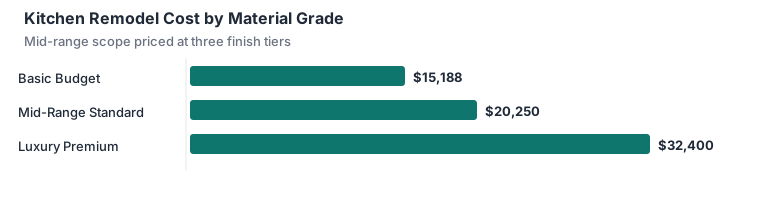
When you request renovation quotes, you will constantly hear about "material grades" — basic, mid-range and luxury. This single choice is the largest cost lever you control, often swinging a project's price by more than 2x for the same square footage. Understanding what each grade means, and where each makes sense, is the key to spending wisely.
What Material Grade Actually Measures
Material grade describes the quality, durability and finish level of the products used — cabinets, countertops, flooring, fixtures, tile and hardware. As a rough rule, basic materials run about 0.75x a baseline cost, mid-range sits at the 1.0x baseline, and luxury pushes to roughly 1.6x or higher. That means upgrading an entire project from basic to luxury can more than double the material budget, which is why the choice deserves real thought rather than a default reflex.
Basic Grade: Function Over Finish
Basic-grade materials prioritize function and affordability. Think stock cabinets, laminate countertops, vinyl or entry-level LVP flooring, builder-grade fixtures and ceramic tile. These materials work, meet code, and look clean when new. The trade-offs are shorter lifespan, fewer style options, and a finish that reads as "builder standard" rather than custom.
Basic grade makes sense for rental properties, spaces you rarely use, projects where you will sell soon, or when budget is the overriding constraint. It is also smart for secondary surfaces where quality is less noticeable. There is no shame in basic materials used strategically — the mistake is using them everywhere and ending up with a space that feels cheap.
Mid-Range Grade: The Sweet Spot for Most Homes
Mid-range materials deliver the best balance of cost, durability and appearance for the majority of homeowners. This tier includes semi-custom cabinets, quartz or granite countertops, quality LVP or engineered hardwood, porcelain tile and brand-name fixtures with solid warranties. Mid-range products look great, last well, and offer wide style choice without the luxury premium.
For most owner-occupied homes, mid-range is the target. It reads as a quality renovation to guests and future buyers, holds up to daily use, and does not blow the budget. If you are unsure where to land, default to mid-range and then selectively upgrade the few elements that matter most to you.
Luxury Grade: Premium Materials and Finishes
Luxury materials are about craftsmanship, exclusivity and top-tier performance: custom cabinetry, natural stone like marble or exotic granite, wide-plank hardwood, designer tile, professional-grade appliances and high-end plumbing fixtures. These materials are beautiful and durable, and in luxury homes they are expected — a high-end house needs high-end finishes to appraise and sell at its tier.
The catch is ROI. In a mid-tier home, luxury finishes rarely return their premium at resale because buyers in that price range are not paying for them. Luxury grade makes sense when you are renovating a luxury home, when you will enjoy the finishes for many years, or when a specific element genuinely matters to you. Just be intentional — luxury everything is how budgets spiral.
The Smartest Strategy: Mix Your Grades
The professionals' secret is that you should not pick one grade for the whole project. Instead, allocate grade by visibility and use:
- Splurge (luxury or high mid-range) on the surfaces you touch and see most — countertops, the shower, cabinet fronts, the primary bath.
- Standardize (mid-range) on flooring, main fixtures and finishes that need to look good and last.
- Save (basic or low mid-range) on hidden or secondary items — interior cabinet boxes, secondary-room finishes, utility spaces.
A kitchen with luxury countertops, mid-range cabinets and a standard backsplash reads as high-end because the eye goes to the stone. Nobody notices the mid-range choices when the focal points shine. This approach captures most of the luxury look for a fraction of the all-luxury cost.
Grade by Material Category
Cabinets: stock (basic), semi-custom (mid), custom (luxury). Semi-custom is the value champion for most kitchens.
Countertops: laminate (basic), quartz/granite (mid), marble/exotic stone (luxury). Quartz offers luxury looks with low maintenance.
Flooring: vinyl/entry LVP (basic), quality LVP/engineered wood (mid), solid hardwood/natural stone (luxury). Mid-range LVP is remarkably durable and attractive.
Fixtures: builder-grade (basic), brand-name (mid), designer (luxury). Mid-range fixtures from reputable brands rarely disappoint.
Tile: basic ceramic (basic), porcelain (mid), designer/handmade (luxury). Porcelain is durable and versatile at a reasonable price.
Don't Confuse Cheap With Value
The lowest-cost material is not always the best value. Cheap flooring that dents and fades, or bargain fixtures that leak, cost more over time through replacement and repair. Conversely, some premium materials cost far more than their real-world performance justifies for a typical home. Value means matching quality to how hard a material will work and how long you need it to last — not simply minimizing the sticker price.
Where Grade Should Never Slip
Regardless of budget, never economize on the elements that protect your home: waterproofing membranes, structural materials, electrical components and roofing underlayment. These are not finishes — they are the systems that prevent expensive failures. Save on what you see; invest in what keeps water out and the structure sound.
How Material Grade Affects Timeline and Lead Times
Grade changes more than price — it changes your schedule. Basic and stock materials are usually in stock and installed quickly, which is part of why they cost less. Mid-range and semi-custom items often carry two to six weeks of lead time, and luxury or custom pieces — bespoke cabinetry, custom glass, special-order stone and imported tile — can take eight to twelve weeks or more. Because demolition should not begin until the long-lead items are ordered (and ideally in hand), a high-grade selection can add weeks to the overall project even if the installation itself is fast. Factor this into your planning: choosing luxury cabinets doesn't just raise the budget, it can push your finish date out by a month or more. If speed matters, mixing a quick-turn stock item into an otherwise high-end room can keep the whole schedule from waiting on one back-ordered piece.
Reading a Materials Spec Sheet Like a Pro
When comparing bids, the grade of every specified material is where hidden differences hide. Look past the brand name to the specifics: for cabinets, is the box plywood or particleboard, and are the drawers dovetailed with soft-close glides? For countertops, what thickness and which stone or engineered product? For flooring, what wear-layer thickness on LVP, or what species and finish on hardwood? For a roof, are the shingles three-tab or architectural, and what warranty length? Two bids can look identical in scope yet differ by thousands purely on grade. Ask each contractor to itemize the exact products so you are comparing the same quality, and beware a low bid that quietly downgrades the materials. A clear spec sheet turns a confusing price gap into an informed choice about where your money goes.
Frequently Asked Questions
What do basic, mid-range and luxury grades actually cost?
As a rule of thumb, basic finishes run about 0.75x a baseline project, mid-range sits at 1.0x, and luxury pushes to roughly 1.6x. The gap comes from material quality, durability, and the labor that premium finishes demand.
Is mid-range material grade good enough?
For most homes, yes. Mid-range balances durability, appearance and cost, and it matches the expectations of typical neighborhoods. Luxury grade pays off mainly in high-end markets or on surfaces you interact with daily.
Should I mix material grades?
Absolutely — it's the smartest strategy. Splurge on the surfaces you touch and see most (cabinets, a shower, countertops) and choose mid-range for backsplashes, secondary flooring and trim to control the total.
Where should material grade never slip?
Anything protecting the home: waterproofing, roofing underlayment and flashing, plumbing valves, and structural components. Cutting grade here trades a small saving for expensive failure.
Does higher grade always mean better value?
No. Value is durability and appeal per dollar, not price. A quality mid-range product that lasts 20 years often beats a luxury one you're paying for beyond what the space or neighborhood warrants.
Grade-by-Grade Cost Examples Across a Home
Seeing grades side by side makes the trade-offs obvious. Take kitchen cabinets: stock (basic) cabinets might run a few thousand dollars and arrive quickly; semi-custom (mid-range) offer more sizes and finishes at a meaningful step up; full custom (luxury) can cost several times the stock price with long lead times. Countertops follow the same pattern — laminate to mid-grade quartz to premium natural stone spans a wide range per square foot. Flooring runs from basic vinyl plank up through engineered wood to premium hardwood or large-format stone tile. Even a roof shows it: three-tab asphalt at the low end, architectural asphalt in the middle, and metal, tile or slate at the top. The lesson isn't that luxury is wasteful or basic is smart — it's that each category offers a spectrum, and the winning strategy is deliberate mixing. Put your money into the one or two elements you'll see and touch every day, hold the line at mid-range on everything secondary, and never let grade slip on the waterproofing and structure that protect it all. A calculator's material-grade selector lets you watch these choices move the total in real time.
Key Takeaways
Material grade is the single largest lever you control over a renovation's cost, and using it deliberately is what separates a smart budget from a wasteful one. Remember these points:
- Basic runs about 0.75x, mid-range 1.0x and luxury roughly 1.6x of a baseline project cost.
- Mid-range is the sweet spot for most homes, balancing durability, appearance and cost.
- Mix grades on purpose: splurge on daily-use surfaces, hold mid-range elsewhere.
- Higher grade often means longer lead times, which can push out your whole schedule.
- Read the spec sheet: two bids can look identical yet differ by thousands on grade alone.
- Never let grade slip on waterproofing, roofing underlayment, plumbing valves or structure.
Value is durability and appeal per dollar, not the highest price tag. A quality mid-range product that lasts two decades usually beats a luxury one you're paying for beyond what your space or neighborhood warrants. Use a calculator's material-grade selector to see instantly how each choice moves your total, then spend where it counts and save where it doesn't. It also helps to think in terms of cost per year of use: a mid-range finish that lasts twenty years often costs less annually than a basic one replaced twice in the same period, while a luxury upgrade only pays off if you truly value it every day or the market rewards it at resale. Grade is a decision, not a default — make it deliberately for each surface in the project.
See the Impact for Yourself
The fastest way to understand how material grade moves your budget is to model it. Our renovation cost calculator includes a material-grade selector that applies these multipliers instantly, so you can compare basic, mid-range and luxury scenarios for your exact project and square footage. Try switching grades and watch the number change — it makes the trade-offs concrete and helps you decide exactly where to spend and where to save.
Authoritative context: the Bureau of Labor Statistics tracks remodeling labor costs, the IRS publishes home energy tax credits, and HUD lists federal home-repair assistance programs.