Regional Cost Differences: Why Location Changes Your Renovation Budget
Why the same renovation costs very differently across US regions — how labor rates, climate, permits and material logistics reshape your budget by location.
The same kitchen remodel can cost $25,000 in one part of the country and $40,000 in another — for identical cabinets, counters and appliances. The difference is not the materials; it is location. Understanding how region reshapes a renovation budget helps you set realistic expectations and spot quotes that are out of line for your area.
Labor Is the Biggest Regional Variable
Materials cost roughly the same nationwide — a box of tile or a sheet of plywood is priced similarly whether you buy it in Ohio or California. What changes dramatically is the cost of the skilled labor that installs it. Contractor and tradesperson wages track local cost of living and market demand, and the spread is enormous: coastal and Northeastern metros can run 45-50% above rural and Southern markets for the same work. Because labor is 30-40% of a typical renovation, this single factor drives most of the regional cost difference.
The Five Broad Cost Regions
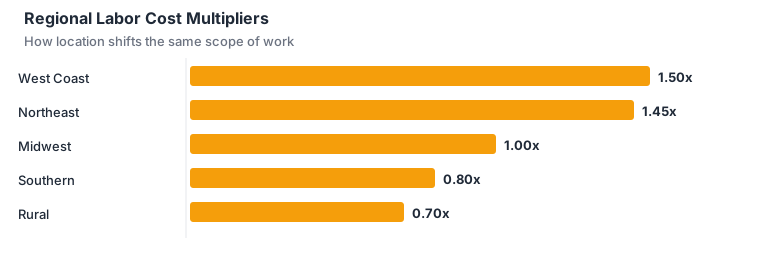
It helps to think in broad regional tiers, each with a rough multiplier against a national baseline:
- West Coast (~1.5x): the priciest labor market, with high demand and strict codes in California, Washington and Oregon metros.
- Northeast (~1.45x): high labor costs, old housing stock and complex permitting in the Boston-to-DC corridor.
- Midwest (~1.0x): the national baseline, with moderate, stable pricing.
- Southern (~0.8x): lower labor costs stretch budgets further across much of the South.
- Rural (~0.7x): the lowest labor rates, though remote logistics can offset some savings.
These are broad strokes — within any region, a booming metro costs more than a quiet small town. But the tiers explain most of the variation you will see when comparing national averages to local quotes. Explore our state-by-state cost guides to see where your state falls.
Climate Changes What You Have to Build
Region does not just change labor rates — it changes what the work requires. In hurricane zones like Florida and the Gulf Coast, impact-rated windows, wind mitigation and elevated construction are necessities that raise cost. In the frozen north, deep insulation, frost-protected footings and high-efficiency heating are non-negotiable. In wildfire-prone parts of California, fire-hardened materials and Class-A roofs add expense. In the desert Southwest, cool roofs and heavy cooling systems matter most. These climate-driven requirements mean two regions can differ in cost even before you count labor.
Soil and Geography Add Regional Line Items
What is under your home varies by region too. Expansive clay soils in Texas, Oklahoma and parts of the Southeast are a leading cause of foundation repair. Rocky New England ledge raises excavation costs. High water tables in the Midwest make basement waterproofing routine. Seismic zones on the West Coast trigger structural retrofits during many remodels. These geographic realities appear as regional line items that homeowners elsewhere never encounter.
Permits and Regulations Differ by Jurisdiction
Building codes, permit fees and approval timelines vary widely between states and even between neighboring towns. High-regulation markets like coastal California and New York City impose more requirements, longer reviews and higher fees, all of which add cost and time. Historic districts add design review. Energy codes like California's Title 24 mandate specific efficiency measures. The regulatory environment is a real, if often overlooked, regional cost factor.
Sales Tax on Materials
Because materials are 40-50% of a project, state sales tax on those materials matters. A handful of states — including Oregon, Montana, New Hampshire, Delaware and Alaska — charge no statewide sales tax, giving their homeowners a modest edge on big material orders. States with higher combined rates add hundreds or thousands to the same material list. It is a small factor next to labor, but it is real money on a large project.
Material Logistics in Remote Areas
In most of the country, materials are readily available at similar prices. But in remote regions — Alaska, Hawaii and isolated rural areas — logistics dominate. Hawaii imports nearly everything by sea, making it the most expensive material market in the nation. Alaska's remote sites and short building season inflate both material and labor costs. These places show that "rural" does not always mean "cheap"; when supplies must travel far, low labor rates are offset by high delivery costs.
Why National Averages Can Mislead
Because of all these factors, a national average cost is only a rough starting point. A quote that looks high compared to a national figure may be perfectly fair for a high-cost region — and a quote that matches the national average might actually be expensive for a low-cost area. Always calibrate expectations to your specific location, not to a country-wide number that blends San Francisco and rural Mississippi into one figure.
How to Budget Accurately for Your Region
- Start with a regionally adjusted estimate, not a raw national average.
- Get local bids from contractors who know your area's labor rates and requirements.
- Account for climate-driven necessities specific to your region.
- Check local permit fees and codes before finalizing your budget.
- Factor in soil, sales tax and logistics where they apply.
Urban, Suburban and Rural Within the Same State
Regional averages hide dramatic swings that happen within a single state. A remodel in a dense, high-wage city core can cost 30-50% more than the identical project two hours away in a rural county — driven by higher labor rates, stricter permitting, tougher parking and access, and pricier disposal. Suburbs usually sit in between, with competitive contractor markets that can actually deliver good value. Rural areas often have lower labor costs but can carry a hidden penalty: fewer contractors to bid against each other, longer travel charges, and higher material delivery costs when suppliers are far away. This is why a state-level or national number is only a starting point. The city you live in — sometimes even the specific neighborhood — sets your real cost, and the only way to know it is to benchmark local quotes against a location-adjusted estimate rather than a broad average.
How to Adjust a National Estimate to Your Area
To turn a national figure into a realistic local one, apply a regional labor multiplier and then sanity-check it against your city. As a rough guide, West Coast and Northeast metros run about 1.45-1.50x the national baseline, the Midwest sits near 1.0x, the South around 0.80x, and rural areas near 0.70x — before local factors. Layer on your climate's material requirements (seismic, hurricane, freeze), your soil conditions (expansive clay, high water table), your jurisdiction's permit costs, and your state's sales tax on materials. A cost calculator that lets you select your state does the heavy lifting automatically, but the final and most reliable adjustment is always the same: collect three local, itemized bids and compare them to the adjusted estimate. If they cluster near your number, you can budget with confidence; if they don't, your local market is telling you something the average couldn't.
Frequently Asked Questions
Why do renovation costs vary so much by region?
Labor is the biggest driver — skilled-trade wages track local markets and can differ by 50% or more between regions. Climate requirements, soil conditions, permitting, sales tax and material logistics add further regional differences.
Which regions are most expensive to renovate in?
West Coast and Northeast metros are typically the priciest, running roughly 1.45-1.50x the national baseline, driven by high labor costs and strict codes. The South and rural areas are generally the most affordable.
Are rural renovations always cheaper?
Not always. Rural labor rates are often lower, but fewer competing contractors, travel charges and higher material delivery costs can offset the savings — especially for specialized work.
How does climate affect renovation cost?
Climate dictates what you must build to. Seismic bracing, hurricane-rated materials, freeze-proof plumbing and heavy insulation are code-driven costs in certain regions that simply don't exist in milder ones.
Does sales tax really change my renovation cost?
Yes. Materials often make up 40-50% of a project, so a state's sales tax on materials can add hundreds to thousands of dollars. A handful of states charge no sales tax at all, giving a modest material-cost advantage.
Why Two Identical Homes Can Cost Thousands Apart
Picture the same 2,000-square-foot house built twice — once in a coastal metro, once in a rural Midwestern county — and give each an identical whole-house renovation. The metro version pays a premium at nearly every step: skilled-trade labor might run 45-50% above the national baseline, permits and plan review cost more and take longer, disposal fees are higher, and parking or access constraints add hours to every delivery. On top of that, coastal building codes may require seismic bracing or hurricane-rated materials the rural home never needs. The rural version starts cheaper on labor, but can lose some of the advantage to travel charges from a thin contractor pool and higher delivery costs for materials trucked in from far away. The result is two identical scopes with totals that can differ by tens of thousands of dollars — not because anyone overpaid, but because location genuinely changes what the work costs. This is the single strongest argument against trusting a national average: your ZIP code, not the country, sets your budget. Always adjust for your region and then confirm with local bids.
Key Takeaways
A national average is only a starting point; your real cost is set by your region and even your specific city. Keep these regional realities in mind:
- Labor is the biggest variable, differing 50% or more between high-cost metros and rural areas.
- West Coast and Northeast metros run about 1.45-1.50x the national baseline; the South and rural areas are cheaper.
- Climate dictates what you must build — seismic, hurricane, freeze and insulation requirements vary by region.
- Soil and geography add line items like foundation work and drainage in certain areas.
- Permits, regulations and sales tax on materials differ by jurisdiction and add up.
- Rural isn't always cheaper once travel charges and material delivery are counted.
Two identical homes with identical scopes can cost tens of thousands apart based on location alone. The reliable path is to apply a regional multiplier, layer on your local climate, soil, permit and tax factors, and then confirm with three local, itemized bids. Use a calculator that lets you select your state, and let local quotes tell you what any average can't. When you gather those bids, make sure each contractor is quoting the same scope and material grade, because a difference that looks regional is sometimes just a difference in what's included. Once you've adjusted for location and compared apples to apples, you'll have a budget that reflects your actual market rather than a number pulled from the wrong part of the country.
Estimate for Your Exact Location
The most reliable way to budget is to start with numbers tailored to where you live. Our renovation cost calculator applies your state's regional multiplier automatically, and our state cost guides break down local factors in detail. Enter your project, select your state, and you will see a range that reflects your region's real costs — a far better foundation than any one-size-fits-all national figure.
Authoritative context: the Bureau of Labor Statistics tracks remodeling labor costs, the IRS publishes home energy tax credits, and HUD lists federal home-repair assistance programs.