Bathroom Remodel Cost Guide: Small Room, Surprising Budget
Why bathroom remodels cost more per square foot than almost any other project, and a clear cost guide for fixtures, tile, labor and waterproofing in 2026.
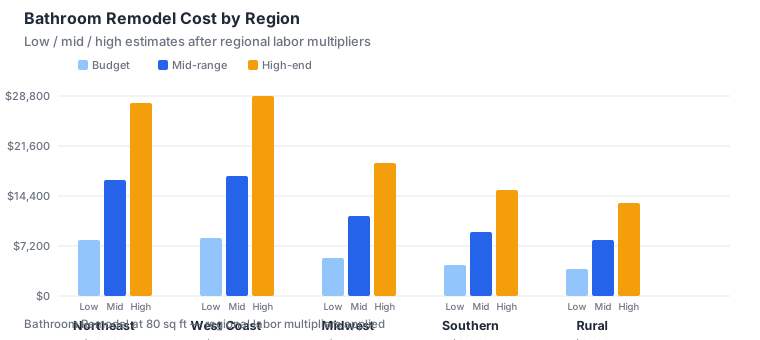
A bathroom is the smallest room most people remodel, yet it is often the most expensive per square foot in the entire house. The reason is density: within a few square feet you pack plumbing, waterproofing, tile, electrical and ventilation, all of which demand skilled trades working in sequence in a tight space. Understanding where a bathroom's money goes explains why a "small" remodel can rival a large one in cost, and helps you spend where it matters instead of everywhere at once.
Why Bathrooms Cost So Much Per Square Foot
The math is simple. A bedroom of the same size needs only paint and flooring; a bathroom needs a supply and drain line to every fixture, a waterproofed wet wall, a vented exhaust, ground-fault electrical, and tile set to a waterproof standard. That is four or five trades doing precise, code-driven work in a space where there is no room to move. The fixed cost of mobilizing those trades — a plumber does not charge less because the room is small — gets divided across fewer square feet, which is exactly why the per-foot number climbs. Accepting this up front stops the shock when a 60-square-foot bath comes back with a five-figure quote.
Fixtures: Tub, Shower, Toilet, Sink
Bathroom fixtures span a vast range. A standard fiberglass tub-surround is the budget option and installs quickly. A tile shower with a linear drain, niche and glass enclosure is the mid-to-luxury end and costs far more in both materials and the labor to waterproof and tile it. Toilets run from basic to smart, heated and wall-hung. Sinks and vanities similarly range from stock to custom. The biggest lever is the shower: a prefab unit is a fraction of a tiled shower, so deciding early whether you want a spa shower or a practical one sets much of the budget.
Tile and Waterproofing: Where Quality Is Non-Negotiable
Behind every shower and tub surround sits a waterproofing membrane, and this is the one place you should never economize. A failed membrane causes water to reach the structure, rots subfloors and walls, and turns a beautiful new bath into a teardown within a few years. Proper waterproofing — a bonded or sheet membrane, correctly sloped pan, sealed seams — is labor-intensive but essential. Over it, tile choice is where you can flex: large-format porcelain is durable and relatively quick to set, while handmade or mosaic tile looks special but costs more to install. Spend on the membrane; choose tile grade by how much you care about the look.
Labor: Plumbing, Tile-Setting, Electrical
A bathroom's labor is dominated by plumbing and tile. Moving a toilet or sink to a new location means opening the floor or wall to reroute drain and supply lines, which is the fastest way to inflate a bath budget. Keeping fixtures on their existing rough-ins is the single biggest saving. Tile-setting is slow, detailed work, and the更复杂的 the pattern the more it costs. Electrical in a bath is specialized too — ground-fault protection, a vent fan on its own circuit, and often a heater or light combo — all code-driven. Because so much of the cost is skilled labor in a cramped space, regional labor rates swing a bath's price as much as any room's.
Ventilation and Moisture Control
A bathroom without proper ventilation breeds mold and peeling paint, and it fails inspection. A ducted exhaust fan vented to the exterior is the standard; a recirculating or poorly ducted fan merely moves humid air around. Upgrading the fan to a quiet, higher-capacity unit is a small cost that protects the whole remodel, and in many jurisdictions a fan with a timer or humidistat is now required. Pair it with a properly sloped ceiling and moisture-resistant drywall in wet areas, and the bath stays healthy for decades instead of developing problems the first humid summer.
The Hidden Costs Unique to Baths
- Waterproofing membrane and pan — invisible, essential, and labor-heavy.
- Old plumbing behind the wall — galvanized or cast-iron lines often must be replaced once exposed.
- Subfloor and rot repair — discovered when the old tub or tile comes out.
- Permits and inspections — plumbing and electrical work almost always require them.
- Shower door and custom glass — a significant line item that surprises first-timers.
Because a bathroom hides so much behind its surfaces, a 10-20% contingency is especially important here. The surprises are not rare; they are routine once the demolition begins.
Sample Bathroom Numbers
A standard mid-range bathroom of about 50 square feet might run: fixtures (tub/shower, toilet, vanity, sink) $1,800-3,500; tile and waterproofing $1,500-3,500; labor (plumbing, tile, electrical, vent) $3,500-7,000; plus permits, disposal and contingency $1,200-2,500 — roughly $8,000-16,500 before regional multipliers. A full gut with a custom tiled shower and relocated fixtures can easily double that. Compare scenarios with the bathroom remodel calculator, and read the result against our state cost guides so your expectation matches your local labor market.
How To Read a Bathroom Quote
A bathroom is small but dense, so a quote must name the things that actually cost: the waterproofing method, whether fixtures stay or move, the tile scope (walls, floor, shower), and the ventilation. A low bid that "includes tile" may mean basic tile set over a thin membrane, while a higher bid includes a proper bonded waterproofing system — and only one of those protects you. Ask each contractor to state the waterproofing approach in writing and to list whether plumbing lines are being relocated. Two quotes that specify the same membrane, same fixture locations and same tile scope will cluster closely; a bid far below the others is almost always missing scope you will pay for later as a change order.
Common Bathroom Budget Traps
The bathroom traps are quieter than a kitchen's but just as real. The biggest is moving the toilet, sink or tub, which opens the floor or wall to reroute supply and drain lines — the fastest way to inflate a small room. The second is skipping or downgrading waterproofing to save a little, which can rot the structure and ruin the new tile within years. The third is forgetting the shower door and custom glass, a line item that surprises first-timers. The fourth is ignoring that older homes often hide galvanized or cast-iron plumbing that must be replaced once exposed. And the fifth is no contingency, so the inevitable subfloor or pipe surprise becomes a mid-project scramble. Name these in your budget up front and the bathroom finishes on its number.
A Sample 50 Sq Ft Bathroom Budget
Here is how a mid-range 50-square-foot bathroom typically divides before regional multipliers, so you can read your own quote against it. Fixtures — a standard tub or shower base, toilet and vanity — run about $1,200 to $3,000, while moving any of them pushes labor well beyond that. Tile and setting materials for floor and a tub or shower surround add $1,500 to $4,000, with custom shower niches and full walls at the top of that range. Plumbing and electrical rough-in and trim, including the all-important waterproofing membrane, costs $2,000 to $5,000. Labor to demolish, tile, and finish averages $2,500 to $5,000. Ventilation, lighting, mirrors and accessories fill $800 to $2,000, and permits plus disposal the remaining $500 to $1,500. That total is the $8,000 to $16,500 most homeowners actually pay for a standard bath, and it explains why a "bath for $4,000" bid usually excludes the shower glass, the tile scope or the waterproofing you will wish you had. Hold your quote to these categories and ask which are lumped together; the answer tells you more than the headline number ever will, and it protects you from the change orders that inflate a small room.
When It Is Your Only Bathroom
The hardest bathroom remodel is the one and only bath in the house, because you cannot simply close the door and use another. The single most important decision is sequencing: ask the contractor to keep a working toilet and at least a cold-water sink available for as many days as possible, and to build the new shower or tub last so you are not without a way to bathe for the whole job. Some homeowners rent a portable toilet for the driveway and a gym membership for showers during a two-week gut, which costs far less than a short-term rental. Move toiletries, towels and a mirror to a staging area, and protect the rest of the home from dust with Zip walls and a filter. Agree in writing on the "no-bath" window so everyone understands the pressure to hit the milestone. If the layout allows, splitting the work so the toilet and vanity return first, then the shower, shortens the truly miserable stretch. Treating the single bath as a logistics problem, not just a construction one, is what keeps the household functioning until the new room is ready.
Frequently Asked Questions
What is the average cost of a bathroom remodel?
A standard mid-range bathroom of about 50 square feet commonly runs $8,000 to $16,500 before regional multipliers, while a full gut with a custom tiled shower and relocated fixtures can double that.
Why does a small bathroom cost so much?
Because so many trades work in sequence in a tight space — plumbing, tile-setting, electrical and ventilation — and the fixed cost of mobilizing them divides across few square feet.
Should I keep my bathroom layout to save money?
Yes, almost always. Keeping the toilet, sink and tub where they are avoids rerouting supply and drain lines, which is the single biggest cost lever in a bathroom.
What is the most important bathroom upgrade?
Proper waterproofing behind every wet surface. It is invisible but it is what keeps the beautiful new tile from hiding a leak that rots the walls and floor.
How long does a bathroom remodel take?
A refresh takes 1-2 weeks; a standard remodel 3-5 weeks; a full gut with a tiled shower and waterproofing cure time 6-8 weeks.
Key Takeaways
- Ask each contractor to name the waterproofing method in writing; the membrane behind your tile matters more than the tile you can see.
- Keep the toilet, sink and tub where they are — relocating any of them is the fastest way to inflate a small room.
- Read the quote by category and confirm the shower glass, tile scope and ventilation are included before you celebrate a low number.
- Budget a contingency and expect older homes to hide galvanized or cast-iron plumbing that must be replaced once exposed.
Plan a Bathroom That Holds Its Value
The smartest bathroom remodel keeps fixtures where they are, invests in invisible waterproofing, and puts the visible style — tile, vanity, fixtures — at the grade you will actually enjoy. Decide the shower type before bidding, get itemized quotes that name the waterproofing method, and hold a real contingency. Start with a tailored estimate from our home renovation cost calculator and you will know whether a bid is fair before a single tile is set — and you will finish with a bath that looks great and stays dry.
Authoritative context: the Bureau of Labor Statistics tracks remodeling labor costs, the IRS publishes home energy tax credits, and HUD lists federal home-repair assistance programs.