Primary Bathroom Remodel Cost Guide: When the Master Suite Warrants More
How a primary (master) bathroom remodel differs in cost and scope from a standard bath — bigger footprints, double vanities, freestanding tubs and spa features in 2026.
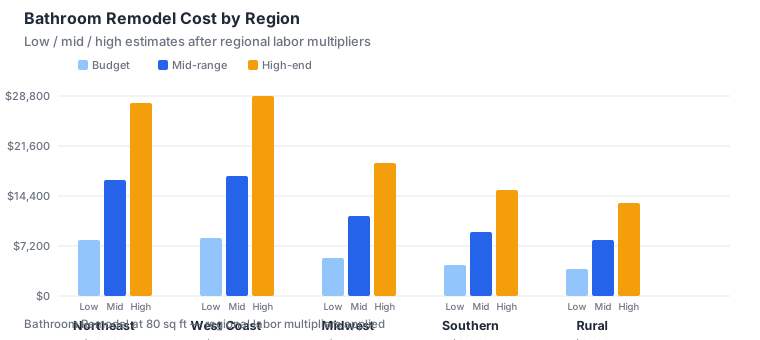
The primary bathroom — often called the master bath — is where homeowners allow themselves to spend more, and for good reason: it is used daily, it is a private retreat, and it carries more square footage and more fixtures than a secondary bath. But that extra ambition is exactly what pushes a primary bath's cost well above a standard one. This guide separates what makes a primary suite different, so you can decide which luxuries are worth the premium and which are better left for another phase.
Bigger Footprint, More Fixtures
A primary bath is typically two to three times the square footage of a hallway bathroom, and it usually carries more: a separate shower and tub, a double vanity, and sometimes a water closet or a sitting area. Each added fixture is another rough-in, another waterproofed assembly, another set of finishes. The double vanity alone doubles a sink's plumbing and countertop. Simply by virtue of size and count, a primary bath's material and labor base starts higher than a standard bath's — so the first budget question is how many of these elements the room truly needs versus how many are nice to have.
The Freestanding Tub Premium
Nothing says primary suite like a freestanding soaking tub, but it carries real cost beyond the tub itself. A freestanding tub needs its own floor or wall supply and a floor or wall drain, often requiring the floor to be opened. It demands clear floor space around it, which is part of why primary baths are larger. And it pairs naturally with a separate walk-in shower, meaning you are now paying for two full bathing assemblies instead of one. A built-in tub-surround or a tub-shower combo is dramatically cheaper. The freestanding tub is a legitimate luxury — just price it with eyes open about the plumbing it triggers.
Walk-In Showers and Spa Features
The signature primary-bath upgrade is the large walk-in shower: a low or no threshold, multiple shower heads, body sprays, a rainhead, a bench, and a frameless glass enclosure. Each added spray body is more plumbing; the bench and niche are more waterproofing and tile; the frameless glass is a custom-order line item. Steam features, heated floors and towel warmers push further into spa territory. These are wonderful to use and they do justify their cost when you will enjoy them for years — but they are the clearest example of where a primary bath's price climbs from "remodel" into "custom build." Decide which features you will actually use before quoting, not after.
Double Vanities and Storage
A double vanity is almost expected in a primary bath and it doubles the sink, the counter and the cabinetry of a single vanity. The counter upgrade that looks great on a single sink looks even better across a long double — and costs proportionally more. Storage is the quieter cost: linen towers, built-in medicine cabinets, and custom millwork add both material and carpentry. Because the primary bath is where people tend to over-customize, this is the room where a disciplined "needs versus wants" list pays off most: a beautiful standard vanity with good storage often satisfies daily life better than an elaborate one you rarely notice.
Where the Primary Bath Justifies Splurging
Unlike a guest bath, the primary suite is used every day by the people who own the home, which changes the ROI math. A luxurious primary bath may not return its full cost at resale, but it returns enormous daily enjoyment — and in higher-end neighborhoods, a dated primary bath can actually hurt a sale while a refined one supports the price. The sensible approach is to spend on the elements you will touch and see (the shower, the vanity, the finishes) and stay measured on the purely showy additions. If resale is near, match the level to your neighborhood; if you are staying, spend for your own comfort within a budget you can hold.
The Hidden Costs Still Apply
- Waterproofing at scale — a large walk-in shower means more membrane and more tile labor.
- Floor structure — a freestanding tub or a second floor location may need reinforcement.
- Old plumbing — primary baths in older homes often hide galvanized or cast-iron lines needing replacement.
- Radiant heat and electrical — heated floors and multiple fans add circuits and permits.
- Custom glass and tile — lead times that can stretch the schedule by weeks.
The same 10-20% contingency that protects a standard bath protects a primary one even more, because the scope is larger and the surprises scale with it.
Sample Primary Bath Numbers
A mid-range primary bath around 100 square feet with a walk-in shower, double vanity and separate tub might run: fixtures and tub $4,000-8,000; shower and waterproofing $3,500-7,000; double vanity and counters $2,500-5,500; tile and labor $6,000-12,000; plus heated floor, fans, permits, disposal and contingency $3,000-6,000 — roughly $19,000-38,500 before regional multipliers. Model your own with the primary bathroom calculator, and compare against our state cost guides to calibrate for local labor.
How To Read a Primary Bath Quote
A primary bath quote must account for scale: a double vanity, a separate shower and tub, heated floors and often a water closet all add scope a standard bath lacks. Insist the quote name the waterproofing method for the large walk-in shower, whether the tub is freestanding (and thus needs its own floor or wall supply and drain), and how many plumbing rough-ins are being added. A bid that lumps "shower and tub" together hides whether it includes the framing, pan and glass that a proper primary suite requires. Two detailed quotes that specify the same fixtures, same waterproofing and same glass will land close; a low bid that omits the frameless glass or the tub plumbing is not cheaper — it is incomplete.
Common Primary Bath Traps
The primary suite invites overspending in ways a guest bath does not. The first trap is the freestanding tub chosen for looks without budgeting the floor or wall rough-in it triggers. The second is a spa shower with multiple bodies and steam, each adding plumbing and a larger waterproofing envelope. The third is custom double vanity and cabinetry that creeps from "nice" to "custom" in price. The fourth is heated floors and multiple fans adding circuits and permits. And the fifth is no contingency sized for the larger scope, so the surprises (old plumbing, subfloor) hit harder. Decide which luxuries you will actually use, keep the rest measured, and the primary bath stays a retreat rather than a budget you regret.
A Sample 100 Sq Ft Primary Bath Budget
A mid-range 100-square-foot primary bath spreads its cost across more fixtures than a standard bath, so here is the honest breakdown before regional multipliers. The double vanity and cabinetry, often semi-custom, run $4,000 to $8,000. A separate walk-in shower with a quality bonded waterproofing system and glass enclosure adds $5,000 to $12,000, and a freestanding or built-in tub with its own rough-in another $2,000 to $6,000. Tile for floor, shower and perhaps a feature wall lands $3,500 to $8,000. Plumbing and electrical for the extra fixtures, heated floor circuit and ventilation cost $3,500 to $7,000. Finish labor — demolition, setting, trim — averages $4,000 to $8,000. Lighting, mirrors, accessories and a possible water closet fill $1,500 to $3,500, with permits and disposal the final $1,000 to $2,500. That is the $19,000 to $38,500 band a primary suite realistically reaches, and it shows why this room is rarely a place to cut — the second vanity and the spa shower are exactly where the budget grows. Map your quote to these lines and you will see immediately whether the glass, the tub rough-in or the waterproofing have been quietly dropped.
Designing for Daily Use, Not the Photo
A primary bath is easy to design for the magazine shot and hard to design for Tuesday morning, so weight every choice toward how the room is actually used. Put the double vanity at a comfortable height with outlets where you stand, not where they look tidy in a rendering. Choose a shower bench and a handheld sprayer if mobility or young children are in the picture, because retrofitting them later means tearing open tile. Reserve the freestanding tub for when you will genuinely soak; if it becomes a laundry perch, you paid plumbing for nothing. Heated floors feel like a luxury but earn their cost in a cold climate where you step out onto tile at 6 a.m. Storage deserves real attention — a primary bath accumulates more than a guest bath, so plan drawers and a linen closet rather than a single vanity cabinet. Skip the steam shower unless you will use it weekly; the plumbing, door and ventilation premium is steep for occasional use. Design for the routine, keep one or two splurges you will touch daily, and the primary suite rewards you every morning instead of only in the listing photos.
Frequently Asked Questions
What is the average cost of a primary bathroom remodel?
A mid-range primary bath around 100 square feet with a walk-in shower, double vanity and separate tub commonly runs $19,000 to $38,500 before regional multipliers, and luxury versions climb higher.
Why does a primary bath cost more than a standard one?
It is larger and carries more fixtures — a double vanity, separate shower and tub, often heated floors — so both material and labor scale with the extra square footage and rough-ins.
Is a freestanding tub worth the cost?
For daily enjoyment it can be, but it needs its own supply and drain, often requiring the floor to be opened, plus clear floor space. Price it with eyes open about the plumbing it triggers.
Should I splurge on a spa shower?
Only if you will use it. Multiple shower heads, body sprays and steam add real plumbing and waterproofing cost; a well-built single shower is far cheaper and often enough.
How long does a primary bathroom remodel take?
Because of the larger scope and custom glass or tile lead times, a primary bath gut commonly runs 6-10 weeks, longer if structural or plumbing changes are involved.
Key Takeaways
- Map the quote to the real cost drivers — the double vanity, the walk-in shower glass, and the tub rough-in — because that is where a primary suite grows.
- Choose splurges you will touch daily, like heated floors, and skip the ones you will not, like a steam shower, to keep the budget honest.
- Hold out for proper waterproofing behind the large shower; it is what protects the expensive tile and glass you are paying for.
- Expect 6-10 weeks for a primary gut, and order custom glass and tile early so the finish is not waiting on a back-order.
Build the Primary Bath You'll Actually Use
A primary bathroom remodel rewards clarity about daily life. Choose the fixtures you will touch every morning, keep the layout efficient, and resist features that look impressive in a showroom but sit unused at home. Start from a realistic estimate with our home renovation cost calculator, get itemized bids that name the waterproofing and plumbing scope, and you can build a primary suite that feels like a retreat without becoming a budget you regret. And if you are weighing this against other rooms, our standard bathroom cost guide lays out where the smaller bath's money goes.
Authoritative context: the Bureau of Labor Statistics tracks remodeling labor costs, the IRS publishes home energy tax credits, and HUD lists federal home-repair assistance programs.