Interior Painting Cost Guide: The Highest-ROI Update Per Dollar
A 2026 interior painting cost guide — why paint is the best value-per-dollar upgrade, per-room pricing, prep versus application, and when to DIY versus hire.
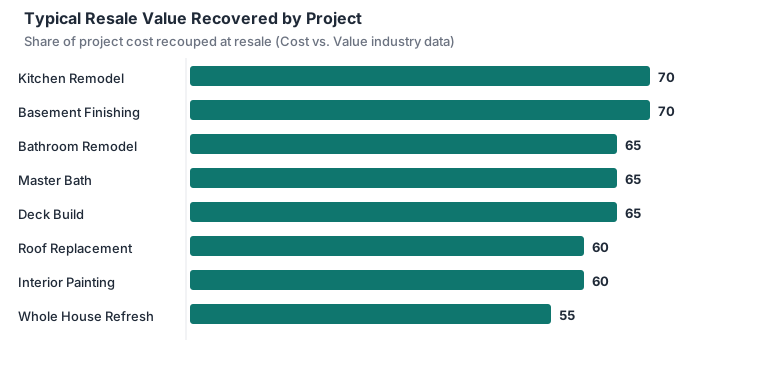
If there is one renovation project that punches far above its price, it is interior painting. For a few dollars per square foot, fresh paint makes a tired home feel move-in ready, covers years of wear, and impresses buyers within seconds. It is also the project most often done badly — because the prep that determines the result is invisible and easy to skip. This guide covers what painting really costs, why the prep matters more than the paint, and how to get a finish that looks professional.
Why Paint Is the ROI Champion
Painting consistently ranks among the highest-return home improvements because the cost is low and the visual impact is immediate. A home with scuffed, dated or clashing wall colors reads as "needs work" to buyers, while a clean, neutral, well-painted home reads as "move-in ready" — and that perception shapes offers. Unlike a kitchen or bath, paint does not involve plumbing, waterproofing or permits, so the entire budget goes to labor and materials rather than infrastructure. For a homeowner watching every dollar, few projects deliver this much perceived value for so little spent, which is exactly why painting is the first upgrade smart renovators make and the last they regret.
Per-Room and Per-Square-Foot Pricing
Painting is usually priced either per room or per square foot of wall and ceiling. A single standard room — walls only — might run a few hundred dollars; adding ceilings, trim and doors raises it. Whole-home interiors cost more in total but less per unit because crews work efficiently across many rooms. Height matters: cathedral or two-story foyers need scaffolding and special equipment, pushing cost up. The number of colors and the amount of trim, crown molding and built-ins also affect labor, because every cut and edge is time. A clear quote names what is included — walls, ceilings, trim, doors, closets — because "paint the living room" means very different things to different painters.
Prep Is Most of the Job
The difference between a professional paint job and an amateur one is almost never the paint — it is the preparation. Proper prep means filling nail holes, sanding rough spots, caulking gaps at trim, priming stains and patched areas, and protecting floors and fixtures. Skipping prep to save time is why so many DIY and cut-rate paint jobs show brush marks, peeling edges and missed gaps within a year. A painter who spends a full day prepping before a roller touches the wall will outperform one who starts applying immediately every time. When comparing bids, the cheaper one is often cheaper because it cut the prep — and the result will show it.
Material Grade: Paint Quality Matters
Within painting, the material "grade" is the paint quality, and here the upgrade usually pays. Premium paints cover in fewer coats, resist scrubbing and fading, and level out imperfections better than bargain paint that needs three coats to hide what one good coat would. Buying the best paint and applying it well often uses less product and less labor than fighting cheap paint through extra coats. For a space you live in, a washable, durable finish on the walls and a harder enamel on trim pays for itself in how long it lasts. The "luxury" here is not wasteful — it is the rare upgrade where spending a little more genuinely costs less over time.
DIY Versus Hiring a Pro
Painting is the classic high-value DIY, and for a patient homeowner with time, it can save real labor cost. The risks are uneven coverage, missed prep, and paint on things it should not be on — all fixable but all visible. Hiring a pro buys speed, clean lines, and prep you might skip, and for ceilings, stairwells and exteriors the safety and efficiency of a crew are worth the price. A sensible split many homeowners use: DIY the easy, accessible rooms you can take your time on, and hire pros for ceilings, tall spaces and the exterior where ladders and efficiency matter. Either way, never skip the prep — that is where the result is won or lost.
The Hidden Painting Costs
- Extensive prep — patching, sanding, caulking; often longer than the painting.
- Ceilings and trim — usually separate line items from walls.
- Furniture moving and protection — sometimes yours, sometimes a crew add-on.
- Repairs revealed — cracked drywall or water stains found during prep.
- Premium paint upgrade — worth it, but a real per-gallon difference.
Painting is low-risk, but a quote that omits ceilings, trim and prep is not a discount — it is a partial job that will look partial when done.
Sample Painting Numbers
A single standard room (walls, prep, two coats) might run $300-700; a whole 2,000-square-foot home interior $3,500-8,000 including ceilings and trim; exteriors cost more due to height, access and surface prep. Model your scope with the interior painting calculator, and compare against our state cost guides for local labor. Remember that premium paint applied well often needs fewer coats — count the labor you save, not just the can price.
How To Read a Painting Quote
A painting quote is only comparable if it names the same scope, because "paint the room" means very different things. Insist each bid state whether walls, ceilings, trim and doors are included, what prep is covered (patching, sanding, caulking, priming), and how many coats. A cheap quote that paints walls only, skips ceilings and trim, and does minimal prep will look partial next to a thorough one — and the prep it skipped is exactly what makes paint peel. Two quotes that name the same surfaces and the same prep will cluster; a low one that omits ceilings or trim is not a deal, it is a smaller job. Read the scope line by line, because painting is sold on assumptions that quietly differ.
Common Painting Budget Traps
The painting traps are about what gets left out. The first is skipping ceilings and trim to lower the number, then discovering the room looks unfinished. The second is minimal prep — no patching, no caulk — so the new coat highlights every flaw the old one hid. The third is bargain paint that needs three coats to cover what one good coat would, erasing the per-gallon saving in labor. The fourth is assuming furniture moving and protection are included when they are billed separately. And the fifth is no contingency for repairs found during prep, like cracked drywall or water stains. Decide the surfaces and the prep up front, choose quality paint, and the result lasts instead of needing a redo.
A Sample Whole-Home Paint Budget
To make the ranges concrete, here is how a whole-home interior repaint for a 2,000-square-foot home typically divides. Walls across the main living areas and bedrooms run $2,000 to $4,500 depending on how many coats the color change needs. Ceilings, often quoted separately, add $600 to $1,500 — and many cheap bids quietly omit them. Trim, doors, baseboards and casings, which demand the most careful labor, cost $800 to $2,000. Prep — patching, sanding, caulking and priming the flaws the old paint hid — runs $400 to $1,000 and is the line that decides whether the finish looks professional. Quality paint itself, at two coats, is $400 to $900, and buying it saves the extra coat a bargain brand needs. Labor for a whole home averages $1,500 to $3,500. That is the $3,500 to $8,000 a thorough interior repaint reaches, and it explains why a "$1,500 whole house" bid means walls only, minimal prep and likely a second coat you pay for later. Map your quote to these surfaces and confirm prep and ceilings are in, because those are the first things a cut-rate painter drops.
How Color and Finish Choices Affect Cost
Paint choices change the bill more than most homeowners expect, so decide with the budget in mind. A dramatic color change — say dark to light, or red to white — usually needs a primer and two top coats where a same-family refresh needs one, adding a coat of labor and paint across every surface. Deep, saturated colors and bright whites are the hardest to cover and may need extra coats regardless of brand. The finish also matters: flat paint hides wall flaws and is cheapest to apply but marks easily, while eggshell and satin cost a little more and stand up to cleaning in kitchens, baths and hallways. Trim and doors want a semi-gloss that resists scuffs, a slightly pricier product applied with more care. Choosing one cohesive palette for the whole home lets the crew work efficiently and avoid constant color changes, quietly lowering labor. If you want an accent wall or a dramatic color, confine it to one room so the premium stays small. Match the finish to the room's wear, keep the palette coherent, and your color decisions control cost instead of inflating it.
Frequently Asked Questions
What is the average cost to paint a house interior?
A single standard room (walls, prep, two coats) commonly runs $300 to $700, while a whole 2,000-square-foot home interior with ceilings and trim runs $3,500 to $8,000.
Is painting worth hiring a pro for?
For ceilings, tall spaces and exteriors, a pro's speed, equipment and clean lines are worth it; for accessible rooms, careful DIY can save real labor cost.
Does expensive paint really matter?
Often yes — premium paint covers in fewer coats, resists scrubbing and fading, and levels imperfections better, frequently costing less over time than bargain paint that needs extra coats.
Why is prep so important in painting?
Prep — patching, sanding, caulking, priming — determines whether the finish looks professional and lasts; skipping it is why cheap paint jobs show brush marks and peel within a year.
How long does interior painting take?
A single room takes 1-2 days including prep; a whole-home interior takes 3-7 days depending on size, trim detail and ceilings.
Key Takeaways
- Confirm ceilings, trim and prep are in the quote; the cheapest bid usually omits them and the result looks unfinished.
- Buy quality paint — it covers in fewer coats and resists scrubbing, often costing less over time than bargain paint that needs extra coats.
- Keep one cohesive palette so the crew works efficiently, and confine any dramatic accent color to a single room.
- Match the finish to the room: flat hides flaws but marks, while satin and semi-gloss stand up to kitchens, baths and trim.
Paint for Impact, Not Just Coverage
A painting project pays off most when the color choices are broadly appealing — soft, neutral, light-reflecting tones that make a home feel larger and cleaner — rather than bold personal statements that narrow the buyer pool. Pair good prep with quality paint, decide what you will DIY versus hire, and insist any quote names walls, ceilings and trim. Start with a tailored estimate from our home renovation cost calculator, and you can refresh a home for a fraction of any other renovation while delivering the single highest perceived-value upgrade per dollar spent.
Authoritative context: the Bureau of Labor Statistics tracks remodeling labor costs, the IRS publishes home energy tax credits, and HUD lists federal home-repair assistance programs.