Best Time of Year to Renovate: Season, Scheduling and Savings in 2026
When to renovate in 2026 — how seasons affect contractor pricing, material lead times, permit queues and your own schedule, plus the off-season savings opportunity.
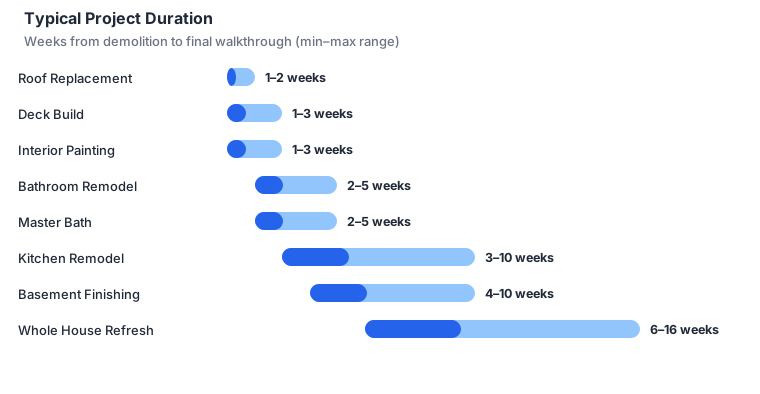
Timing a renovation is a decision most homeowners make by accident — they start when they feel ready, which is often exactly when everyone else starts too. But the time of year you begin shapes your price, your schedule, your wait for materials, and how tolerable the disruption is. This guide explains how the calendar moves your renovation, and how choosing your start date deliberately can save money and stress without sacrificing quality.
The Spring-Summer Rush
Spring and early summer are peak renovation season. The weather is good, homeowners want projects done before holidays and reunions, and contractors' books fill fast. The downsides are real: crews are booked weeks or months out, scheduling is less flexible, and some contractors are too busy to discount. If your project is weather-dependent — roofing, exterior work, decks — spring and early summer may simply be the only practical window, so you accept the premium and the wait as the cost of doing it when the work can actually proceed. For interior projects, though, the peak season is often a choice you can avoid.
The Off-Season Opportunity
Late fall and winter are when contractor demand drops in most of the country. Crews have gaps to fill, and many will discount to keep them working through the slow months. For interior work — kitchens, baths, basements, painting — that is weather-independent, the off-season is a genuine savings opportunity with no quality penalty, because the same crews do the same work, just with more open calendar. The trade-off is mostly psychological: starting a kitchen in November means living through the holidays with a half-finished room. Homeowners who plan around that — or who do not care about holiday entertaining — capture real savings simply by shifting the start date a few months.
Material Lead Times Follow Their Own Clock
Season affects availability as much as labor. Custom cabinets, special-order tile, certain fixtures and windows can carry lead times of four to twelve weeks regardless of season, and those clocks start when you order, not when you demolish. A common mistake is to schedule demolition for "when the contractor is free" and only then order the long-lead items, pushing the finish months past the estimate. The smarter move is to order long-lead materials and file permits during the slow season, so that when crews become available the materials are already in hand and the project flows without waiting on a back-ordered item.
Permit Queues Vary by Season
Permit review and inspection availability shift with demand too. In peak season, understaffed permit offices and busy inspectors mean longer waits at every gate, and a delayed inspection can stall a trade that cannot proceed. In slower months, the same office may turn permits around in days. Because permits and inspections sit on the critical path of nearly every project, their seasonal speed-up in the off-season is part of why winter projects can actually finish faster despite shorter daylight. Building the permit and inspection timeline into your plan — and favoring the slow season when your work allows — removes one of the most common sources of delay.
Matching the Project to the Season
- Roofing and exteriors: late spring through early fall, when weather permits safe, dry work.
- Decks and additions: spring to early fall for footing pours and cure time.
- Kitchens and baths: any season, with the off-season offering price and schedule advantages.
- Basements and interiors: ideal for fall and winter when crews seek work.
- Painting: interior year-round; exterior in dry, moderate weather.
The art is matching weather-dependent work to its window while shifting weather-independent work into the slow season where you can.
Your Own Schedule Matters Most
Beyond price and permits, the best time to renovate is when your life can absorb it. A kitchen remodel is far easier if you are not hosting Thanksgiving that month; a whole-house project is smoother if the kids are not home for a long summer. Many homeowners optimize for the contractor's calendar and forget their own, then discover the disruption lands on the exact weeks they needed the home calm. The ideal start date balances the savings of the off-season with the reality of your family's year, because a project timed to your life is a project you can actually live through.
Sample Timing Trade-Offs
To make it concrete: the same kitchen remodel might cost $30,000 in July with a six-week wait for a crew, or $26,000 in January with a crew available in two weeks — a savings of roughly $4,000 plus a faster start, with identical quality because the same trades do the work. The only penalty is a January kitchen under construction. For many homeowners that trade is worth it; for those hosting holiday dinners, it is not. Model your project cost with the home renovation cost calculator as a baseline, then ask contractors directly whether off-peak scheduling earns a discount in your area — and read our state cost guides since regional labor swings the savings.
How To Read the Seasonal Trade-Off
The "best" time is not one season — it is a match between the project type and the calendar. For weather-dependent work (roofing, decks, additions, exteriors) the window is late spring through early fall, full stop, because the work cannot proceed safely or cure in bad weather. For weather-independent interior work (kitchens, baths, basements, painting) the slow season — late fall and winter — is genuinely better on price and schedule, with no quality penalty because the same crews do the same work. The mistake is applying one rule to both: renovating the roof in January or refusing to start the kitchen until summer. Match the project to its window, and shift the interior work into the off-season where you can capture the savings.
Common Timing Traps
The timing traps cost money and patience. The first is starting interior work in peak season "because that is when people renovate," paying more for the same crew and waiting longer for one. The second is scheduling exterior work for late fall and watching weather erase weeks. The third is ordering long-lead materials only after demolition begins, so the whole job waits on a back-ordered cabinet regardless of season. The fourth is forgetting permit offices slow in peak season, adding inspection waits to an already busy timeline. And the fifth is ignoring your own calendar — a kitchen started before the holidays you host. Plan the season around the project type and your life, order early, and the calendar becomes an advantage instead of a tax.
A Month-by-Month Renovation Calendar
A simple calendar removes most timing anxiety, so here is how the year actually sorts by project type. Late fall through winter — November to February — is prime time for interiors: kitchens, baths, basements and painting, when crews discount and schedules open with no quality penalty. Early spring — March to April — is the start of exterior season and the last cheap window to book interior crews before demand spikes. Late spring through summer — May to August — is peak for roofing, decks, additions and exteriors, with the highest prices and longest waits, so avoid starting interiors then if you can. Early fall — September to October — is a shoulder season where exterior work still finishes before weather closes and some interior crews have opening. The practical move is to push every weather-independent job into the slow months and reserve the warm window strictly for work that needs it. Match the calendar to the project, not the other way around, and you capture the off-season savings without ever compromising the work that truly depends on the sky.
Book Crews and Materials in Advance
The single biggest timing mistake is waiting until the season starts to order and book, because the bottleneck is rarely labor alone — it is lead time. Cabinets commonly take six to twelve weeks, custom tile and fixtures four to eight, windows and some appliances similar, and all of that sits on the critical path regardless of which month you start. Order long-lead items during the slow season so they arrive the week demolition begins, and you never pay crews to stand around a back-ordered cabinet. Book the crew four to eight weeks ahead for peak season and two to four for the off-season, and file permits early because review offices back up exactly when everyone renovates. If you miss the booking window, you either pay peak pricing or wait weeks; neither is free. The calmest renovations are the ones where the materials are in the garage and the permit is approved before the first tool hits the wall. Plan the procurement calendar as seriously as the construction one, and the season works for you instead of against you.
Frequently Asked Questions
What is the cheapest time of year to renovate?
For interior work, late fall and winter are usually cheapest, when contractors discount to fill slow schedules — with no quality penalty because the same crews do the work.
Can I renovate in winter?
Yes for interiors — kitchens, baths, basements and painting are weather-independent and often cheaper and faster to schedule in winter.
When should I avoid renovating?
Avoid exterior and structural work in deep winter or rainy season, when weather stops progress; and avoid starting interior work right before you host major events.
Does off-season work cost less and take less time?
Often both — crews have open calendars and may discount, and permit offices are less backlogged, though long material lead times still apply whenever you order.
Should I order materials before the season starts?
Yes. Order long-lead items like cabinets and custom tile and file permits during the slow season so the crew never waits on a back-order once work begins.
Key Takeaways
- Match the project to the season: exteriors in warm months, interiors in the off-season, with no quality penalty on the latter.
- Avoid starting interior work in peak season just because that is when people renovate; you pay more for the same crew.
- Order long-lead cabinets, tile and fixtures during the slow season so the crew never waits on a back-order.
- Book the crew and file permits weeks ahead, because the real bottleneck is lead time, not labor alone.
Time Your Renovation Deliberately
The cheapest, fastest renovation is often the one that starts in the slow season for weather-independent work, with long-lead materials ordered and permits filed before demolition. Match exterior and structural work to its weather window, shift interiors into the off-season, and align the start with your own calendar so the disruption lands when you can absorb it. Plan the timing with a realistic estimate from our home renovation cost calculator, and you can turn the calendar from an accident into a tool that saves money and stress on the same quality of work.
Authoritative context: the Bureau of Labor Statistics tracks remodeling labor costs, the IRS publishes home energy tax credits, and HUD lists federal home-repair assistance programs.