The Hidden Costs of Home Renovation: Permits, Demolition and Contingency
The renovation costs homeowners forget: permits, demolition, waste disposal, design fees, temporary housing and the all-important contingency reserve.
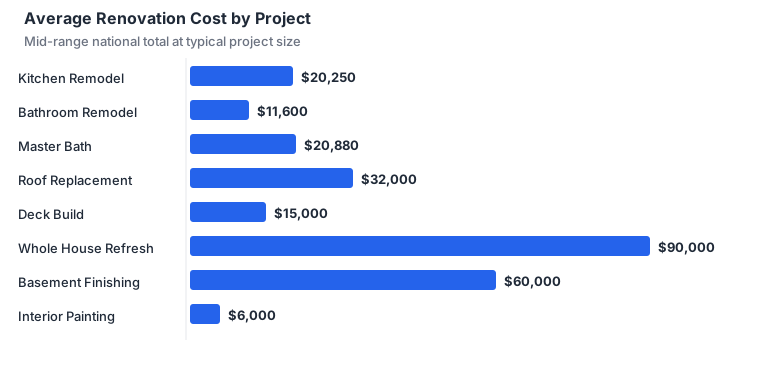
Ask homeowners why their renovation went over budget, and you will rarely hear "the cabinets cost more than expected." Overruns almost always come from the costs nobody planned for — the permits, the demolition surprises, the disposal fees and the contingency that was never set aside. Here is a complete tour of the hidden costs, so none of them ambush you.
Permits and Inspections
Most structural, electrical, plumbing and mechanical work requires a building permit, and increasingly so does reroofing. Permit fees typically run 2-5% of the project's construction value, and they buy you a series of inspections at framing, rough-in and final stages. Skipping permits to save this fee is a false economy: unpermitted work routinely surfaces during a home sale, can void insurance claims, and may force expensive retroactive approval or even tear-out. Budget for permits from the start and treat them as protection, not a tax.
Demolition and the Surprises It Reveals
Demolition costs money in two ways. First, there is the labor to safely remove existing materials. Second — and far larger — are the surprises demolition exposes. Once walls open up, you may find outdated wiring that must be replaced to meet code, hidden water damage, mold, rotted subfloor, failed plumbing, or a structural issue. None of these were visible when you got your quote, but all of them must be fixed. Older homes hide more surprises, which is why contingency reserves scale with a home's age.
Waste Disposal and Dumpster Rental
Renovations generate an astonishing volume of debris, and hauling it away is not free. Dumpster rental, disposal fees and multiple hauls add up quickly on larger projects. Some materials — old flooring, certain insulation, hazardous materials like asbestos or lead paint in older homes — carry special disposal requirements and higher costs. Confirm whether your contractor's bid includes disposal, because "gut the kitchen" and "gut the kitchen and haul it away" are different prices.
Design and Professional Fees
Complex projects often need professionals beyond the contractor. An architect or structural engineer may be required for additions, wall removals or major layout changes. An interior designer can save money through better decisions but charges for the service. These fees — often 5-15% of project cost for design-involved work — are legitimate and valuable, but they surprise homeowners who budgeted only for construction.
Temporary Living Costs
A kitchen remodel means weeks without a functioning kitchen — expect higher spending on takeout and dining out. A whole-house project may require moving out entirely, adding rent or extended-stay costs. Even a single-bathroom home undergoing a bath remodel creates real inconvenience. These lifestyle costs are easy to ignore in planning and painful to absorb in the moment. Estimate them honestly and add them to the budget.
Upgrading Adjacent Areas
New work has a way of exposing old work. A beautiful new kitchen makes the adjoining worn flooring look tired; fresh paint in one room highlights the dated trim next door. This "while we're at it" effect is a genuine cost driver. It is not wrong to extend the scope for a cohesive result — just decide deliberately and budget for it, rather than being pulled into unplanned add-ons mid-project.
Code Upgrades Triggered by the Work
Renovations can trigger required updates to bring a home to current code. Opening a wall may require new insulation; adding a circuit may require an electrical panel upgrade; a bathroom remodel may require GFCI protection and proper ventilation. These are not optional, and they are often unforeseeable until work begins. They are another reason the contingency exists.
Delivery, Installation and Small Fees
The small stuff accumulates. Appliance delivery and installation, material delivery charges, equipment rental, and restocking fees on returned materials all add up. Individually minor, together they can total hundreds or thousands on a large project. A detailed, itemized contractor bid helps surface these, but some will still be yours to cover.
The Contingency: Your Financial Airbag
Every hidden cost above points to one conclusion: you need a contingency fund. Set aside at least 10% of your project budget, and 15-20% for homes older than about 30 years or for projects involving major structural or systems work. The contingency is not padding to be spent freely — it is the reserve that lets you absorb the inevitable surprises without pausing the project or slashing quality. Homeowners who budget a contingency finish smoothly; those who do not face hard choices at the worst possible moment.
How to Plan for Hidden Costs
- Ask for itemized bids that explicitly list permits, demolition and disposal.
- Add a contingency of 10-20% based on your home's age and project scope.
- Budget lifestyle costs — dining out, temporary housing — as real line items.
- Investigate before you demolish where possible, so fewer surprises are truly surprises.
- Confirm who handles disposal, delivery and installation in writing.
- Expect code upgrades in older homes and price them into the reserve.
How Contractors Reveal (or Hide) These Costs in a Bid
The way a bid is written tells you how many hidden costs will surface later. A thorough contractor itemizes permits, demolition, disposal, cleanup and an allowance for surprises; a thin bid rolls everything into a single lump sum that looks cheaper until the extras arrive as change orders. Watch especially for "allowances" — placeholder dollar amounts for items like tile or fixtures that you haven't chosen yet. If those allowances are set unrealistically low, the bid appears competitive but balloons once you pick real products. Ask each contractor how they handle conditions discovered after demolition, whether disposal and permit fees are included or billed separately, and what the allowances assume. A bid that openly names its uncertainties is more honest than one that hides them, even if the honest one looks higher at first glance. Comparing bids only works when they include the same hidden costs.
The Time and Stress Cost Nobody Budgets For
Not every hidden cost is a line item. A renovation consumes decision-making energy — dozens of choices about materials, layouts and trade-offs, often under time pressure. It disrupts daily life: a kitchen remodel can mean weeks of cooking from a microwave, and a whole-house project may require moving out entirely. There is the cost of coordinating deliveries, being home for inspections, and managing the emotional toll of living in a construction zone. None of this appears in a contractor's bid, yet it shapes whether the experience is worth it. Budget for it by building in schedule buffer, planning temporary arrangements before work starts, and making as many decisions as possible up front so you're choosing calmly rather than reacting under pressure. Acknowledging these costs doesn't make them go away, but it keeps them from ambushing you halfway through the project.
Frequently Asked Questions
What are the most commonly forgotten renovation costs?
Permits and inspections, waste disposal and dumpster rental, design and drawing fees, temporary living costs, code upgrades triggered by opening walls, and the contingency for surprises found during demolition.
How much do permits cost?
Permit fees typically run 2-5% of a project's construction value, varying widely by jurisdiction and scope. Structural, electrical, plumbing and mechanical work almost always require them.
Why do older homes cost more to renovate?
Opening walls in an older home often reveals outdated wiring, failing plumbing, water damage or materials that no longer meet code. Bringing these up to standard is required once discovered, which is why a larger contingency is essential.
What is a renovation contingency and how big should it be?
It's a reserve for the unexpected — 10% for newer homes and simple projects, 15-20% for older homes or anything that opens structure and systems. Treat it as untouchable until a genuine surprise appears.
Do I have to pay to bring things up to code?
Often yes. Once work exposes a non-compliant system, many jurisdictions require it to be corrected as part of the permit. Budgeting for possible code upgrades prevents a mid-project shock.
A Line-by-Line Hidden-Cost Checklist
Use this checklist to pressure-test any budget before you commit. Permits and inspections — 2-5% of construction value, required for most structural, electrical, plumbing and mechanical work. Demolition and disposal — labor to remove and haul, plus dumpster rental. Design and professional fees — drawings, engineering or designer time. Code upgrades — bringing exposed wiring, plumbing or insulation up to current code once walls are open. Temporary living — eating out, a rental kitchen, or housing during heavy work. Upgrading adjacent areas — the "while we're at it" flooring or paint that new work makes look tired. Delivery and installation fees — appliance haul-away, fixture delivery, small hardware. Utility and dumpster logistics — power, water and access during the job. Contingency — 10-20% held in reserve for genuine surprises. Walk down this list line by line for your own project, assign a dollar figure to each, and add them to your construction estimate. What looks like a padded budget is really just a complete one — and it's far cheaper to plan for these costs now than to scramble for cash mid-project.
Key Takeaways
Most renovation budgets blow up not from one disaster but from a stack of predictable costs that never made it onto the list. Guard against them with these reminders:
- Permits and inspections add 2-5% of construction value and are required for most real work.
- Demolition, disposal and dumpster rental are real line items, not afterthoughts.
- Opening walls reveals surprises — outdated wiring, water damage and code upgrades — especially in older homes.
- Soft costs add up: design fees, delivery, temporary living and "while we're at it" upgrades.
- A 10-20% contingency is your financial airbag; keep it untouched until a genuine surprise appears.
- Compare bids on equal footing — a thin lump sum hides costs a detailed bid names openly.
The fix is simple discipline: walk a complete hidden-cost checklist for your own project, assign a dollar figure to each item, and add them to your construction estimate before you commit. A budget that looks padded is usually just a budget that's finally complete — and planning for these costs now is far cheaper than scrambling for cash mid-project. The homeowners who finish on budget are rarely the luckiest ones; they are the ones who wrote down every foreseeable cost before signing a contract and kept a real reserve for the rest. Treat the hidden costs as certainties to be planned for rather than possibilities to be hoped away, and the final invoice will look a lot like the number you started with.
Model the Full Picture
A realistic budget accounts for far more than materials and labor. Our renovation cost calculator includes toggles for permits, demolition, waste disposal, design fees and a contingency reserve, so the estimate you get reflects the true cost of the project — not just the pretty parts. Plan for the hidden costs up front, and the only surprise left will be finishing on budget.
Authoritative context: the Bureau of Labor Statistics tracks remodeling labor costs, the IRS publishes home energy tax credits, and HUD lists federal home-repair assistance programs.