Renovation Timeline: How Long Does Each Project Really Take?
Realistic renovation timelines for kitchens, bathrooms, roofs, decks, basements and whole-house projects — plus what causes delays and how to plan around them.
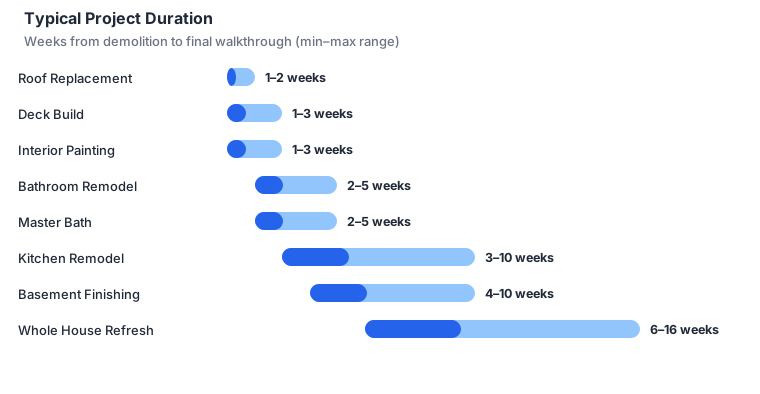
"How long will it take?" is one of the first questions homeowners ask — and one of the most underestimated. A realistic timeline helps you plan your life, arrange temporary space, and hold your contractor accountable. Here is what to expect for common projects, plus the factors that stretch schedules and how to plan around them.
Why Timelines Vary So Much
Two identical-sounding projects can take very different amounts of time depending on scope, size, material lead times, permit approval, and whether surprises appear during the work. A timeline is not just the days of active construction — it includes design and planning, permit review, material ordering and delivery, the build itself, inspections and final punch-list items. Homeowners who count only the build phase are consistently surprised by how long the full process takes.
Kitchen Remodel Timeline
A cosmetic kitchen refresh — paint, hardware, countertop and appliance swaps without moving anything — can wrap in 1-3 weeks. A standard remodel with new cabinets, counters, flooring and fixtures typically runs 4-8 weeks of active work. A full gut with layout changes, relocated plumbing and custom cabinetry can take 10-12 weeks or more. Cabinet lead times are the usual bottleneck: custom cabinets can take weeks to manufacture, so order early. Plan for the kitchen to be unusable for most of the project and set up a temporary cooking space.
Bathroom Remodel Timeline
Bathrooms are small but time-dense because so many trades work in sequence within a tight space. A basic refresh takes 1-2 weeks. A standard remodel runs 3-5 weeks. A full gut with new tile, relocated fixtures and waterproofing can take 6-8 weeks, partly because waterproofing and mortar need cure time that cannot be rushed. If it is your only bathroom, arrange alternatives before demolition begins.
Roof Replacement Timeline
Roof replacement is one of the faster major projects. Most asphalt-shingle reroofs on an average home finish in 1-3 days of active work. Metal, tile and slate take longer due to material handling and installation complexity. The bigger schedule variable is weather — rain or high wind halts roofing — and permit approval before work starts. Build in weather flexibility, especially in rainy or snowy seasons.
Deck Build Timeline
A simple ground-level deck can go up in 1-2 weeks. Larger, elevated or multi-level decks with stairs and railings take 3-4 weeks, and footing inspections add scheduling dependencies — you often cannot proceed until an inspector signs off on the footings. Weather affects exterior work here too, and composite or specialty materials may have lead times.
Basement Finishing Timeline
Finishing a basement typically takes 4-8 weeks. The range widens if the project includes waterproofing (which must be completed and verified before finishing), egress-window excavation, or a full bathroom with below-grade plumbing. Moisture problems discovered during the work can pause everything until resolved, so address water issues before scheduling the finish work.
Whole-House Renovation Timeline
Whole-house projects are measured in months, not weeks — typically 3-6 months depending on size, scope and whether structural changes or additions are involved. The upside of doing everything at once is efficiency: trades sequence their work without repeated mobilization. The downside is disruption, which is why many families move out for the duration. Detailed scheduling and a capable general contractor are essential to keep a project of this scale on track.
Painting Timeline
Interior painting is among the quickest projects. A single room takes 1-2 days including prep; a whole-home interior takes 3-7 days depending on size, trim detail and ceilings. Prep — patching, sanding, taping and priming — often takes longer than the painting itself and largely determines the quality of the result. Do not let anyone rush the prep to compress the schedule.
What Causes Delays
- Permit review: approval can take days to weeks depending on your jurisdiction.
- Material lead times: custom cabinets, specialty tile and certain fixtures can take weeks to arrive.
- Hidden surprises: water damage, outdated wiring or structural issues found during demolition.
- Change orders: every mid-project change adds time as well as cost.
- Weather: exterior work stops for rain, snow and extreme temperatures.
- Inspection scheduling: work often cannot proceed until an inspector signs off.
- Contractor availability: in-demand contractors and busy seasons stretch schedules.
How to Keep Your Project on Schedule
- Finalize everything before starting — design, selections and scope. Changes are the biggest self-inflicted delay.
- Order long-lead materials early, especially cabinets and specialty items.
- Pull permits ahead of time so approval is not on the critical path.
- Build in buffer — assume the timeline will run somewhat longer than quoted.
- Communicate regularly with your contractor and confirm the schedule weekly.
- Schedule weather-sensitive work in favorable seasons where you can.
Permits and Lead Times: The Invisible Clock
The construction you can see is only part of the timeline. Before a crew swings a hammer, permits must be applied for and approved — a process that ranges from same-day over the counter to several weeks depending on the jurisdiction and whether plans need review. Running in parallel is material lead time: stock items ship fast, but semi-custom cabinets, special-order tile, custom glass and windows can take four to twelve weeks to arrive. The smartest schedules treat these invisible clocks as the real start date, ordering long-lead materials and filing permits well before demolition so the crew never sits idle waiting. A project that "takes six weeks to build" can easily span three months once permit approval and cabinet manufacturing are counted. Ask your contractor to map these dependencies up front, because the fastest way to blow a timeline is to discover a ten-week lead time after the walls are already open.
How to Read a Contractor's Schedule
A credible schedule is sequenced by trade and dependency, not a single optimistic end date. Look for the logical order — demolition, then rough-in (framing, plumbing, electrical), inspections, insulation and drywall, then finishes, then a final inspection and punch list. Each inspection is a gate that can pause the job if it fails, so a realistic schedule builds in time for them. Be wary of a contractor who promises an aggressive finish with no buffer; renovation almost always uncovers something, and a schedule with zero slack is a schedule that will slip. Ask what the critical path is — the sequence of tasks that determines the finish date — and what could delay it. A contractor who can explain their schedule in terms of dependencies and inspection gates is one who has actually planned the work, not just quoted a hopeful number.
Frequently Asked Questions
How long does a kitchen remodel take?
A cosmetic refresh takes 1-3 weeks, a standard remodel 4-8 weeks, and a full gut with custom cabinetry and layout changes 10-12 weeks — plus cabinet lead time before demolition begins.
How long does a bathroom remodel take?
A basic refresh runs 1-2 weeks, a standard remodel 3-5 weeks, and a full gut with custom tile 6-8 weeks including waterproofing cure times.
How long does a whole-house renovation take?
Typically 3-6 months depending on size, scope and whether structural changes or additions are involved. A complete, locked design before work starts is the best way to protect the timeline.
What causes the most renovation delays?
Long material lead times, permit and inspection waits, mid-project change orders, and surprises found once walls are opened. Ordering materials early and finalizing decisions up front prevents most of them.
Can I speed up a renovation?
Yes — finalize the design and every selection before demolition, order long-lead items early, keep decisions prompt, avoid change orders, and where practical move out so crews can work continuously.
A Week-by-Week Look at a Kitchen Remodel
Averages feel abstract until you see the days laid out. For a standard kitchen remodel, the weeks before demolition are the real starting line: permit approval and cabinet manufacturing can run four to eight weeks, so ordering early is everything. Once work begins, week one is typically demolition and the discovery of anything hidden behind the old cabinets. Weeks two and three cover rough-in — plumbing, electrical and any framing changes — followed by inspections that must pass before walls close. Week four brings drywall repair, priming and painting. Week five is usually flooring and the cabinet installation that the whole project has been waiting on. Week six covers countertop templating and fabrication (a lead time in itself), then installation, backsplash tile and plumbing hookup. The final stretch handles appliances, hardware, punch-list touch-ups and the final inspection. Add it up and a "six-week" kitchen easily spans two to three months from decision to done. The takeaway for every project type is the same: the visible construction is only part of the clock, so plan around permits, inspections and lead times, not just the days a crew is on site.
Key Takeaways
Renovation timelines slip most often because homeowners count only the days a crew is on site. Plan the whole journey with these points in mind:
- Permits and material lead times are the invisible clock — often weeks before construction starts.
- Kitchens take 1-3 weeks (refresh) to 10-12 weeks (full gut), plus cabinet lead time.
- Bathrooms run 1-2 weeks (refresh) to 6-8 weeks (full gut with tile).
- Whole-house projects span 3-6 months depending on scope and structural work.
- Inspections are gates that can pause the job, so a realistic schedule builds in time for them.
- Order early, decide early, and avoid change orders to keep the project moving.
A credible contractor sequences work by trade and dependency and can explain the critical path — the chain of tasks that sets the finish date. Treat a schedule with zero buffer as a warning sign, because renovation almost always uncovers something. Map permits, lead times and inspections up front, and your project is far more likely to finish when you expect it to. It also pays to align your own life with the schedule: arrange temporary space before demolition if a kitchen or only bathroom will be out of service, keep decisions ready so the crew is never waiting on you, and build in a week or two of buffer for the surprises that almost every renovation reveals. A timeline you plan around is a timeline you can live with; one you merely hope for is the one that frustrates everyone involved. Ask your contractor for a written schedule with milestone dates, check in against it regularly, and address any slippage early rather than at the end. Realistic expectations, set at the start and revisited as the work proceeds, are what turn a long renovation into a manageable one.
Plan the Whole Journey
A renovation timeline starts long before construction and ends after the final inspection. Account for planning, permits and material lead times, not just the build, and you will set expectations you can actually meet. As you scope your project, use our cost calculator to estimate both budget and an expected timeline for your specific work — knowing roughly how long it will take is just as valuable as knowing what it will cost.
Authoritative context: the Bureau of Labor Statistics tracks remodeling labor costs, the IRS publishes home energy tax credits, and HUD lists federal home-repair assistance programs.