Financing a Home Renovation: HELOC, Cash-Out Refi, Loans and More
Compare ways to finance a home renovation in 2026 — HELOC, home equity loan, cash-out refinance, personal loans, credit cards and renovation loans.
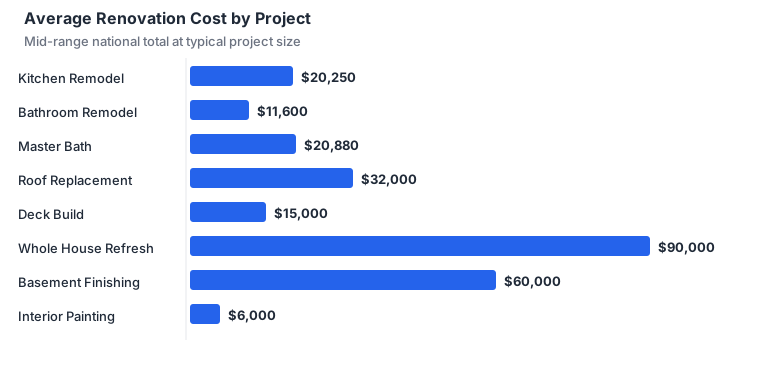
Once you know what your renovation will cost, the next question is how to pay for it. The financing method you choose affects your interest rate, monthly payment, risk and flexibility. Here is a clear comparison of the main options so you can match the right tool to your project and situation.
Paying With Cash
If you have the savings, paying cash is the simplest and cheapest option — no interest, no fees, no debt. It also imposes natural discipline, because you feel every dollar. The downside is opportunity cost: draining your emergency fund or investments to renovate can leave you exposed if a job loss or emergency follows. A sensible rule is to pay cash only if you can do so while keeping a healthy emergency reserve intact. Never renovate your way out of a safety net.
Home Equity Line of Credit (HELOC)
A HELOC is a revolving credit line secured by your home's equity, working somewhat like a credit card with a much lower rate. You draw funds as needed during a "draw period" and pay interest only on what you use. This flexibility is ideal for phased projects or when the final cost is uncertain, because you are not locked into borrowing a fixed lump sum. Rates are typically variable, so payments can rise if interest rates climb. Because your home is collateral, missed payments put the house at risk — this is serious debt, not a casual credit line.
Home Equity Loan
A home equity loan gives you a lump sum upfront at a fixed rate, repaid over a set term — sometimes called a second mortgage. It suits projects with a known, fixed cost where you want predictable payments. The fixed rate protects you from rising interest, and the structure enforces steady repayment. As with a HELOC, your home secures the loan, so borrow only what the project genuinely needs and what you can comfortably repay.
Cash-Out Refinance
A cash-out refinance replaces your existing mortgage with a larger one and gives you the difference in cash. It can make sense when you can secure a better rate than your current mortgage or when you want to fold renovation costs into a single monthly payment. The trade-offs are real: you reset your mortgage term, pay closing costs, and if current rates are higher than your existing mortgage, you may pay more overall. Run the full-cost comparison, not just the monthly payment, before choosing this path.
Personal Loans
An unsecured personal loan does not use your home as collateral, funds quickly, and works for smaller projects. Because it is unsecured, interest rates are higher than home-equity options and terms are shorter, meaning higher monthly payments. Personal loans suit borrowers who lack sufficient home equity, want to avoid risking their home, or need a modest amount fast. For larger renovations, the higher rate usually makes equity-based options more economical.
Renovation-Specific Loans
Some loan programs are designed specifically for renovation, letting you borrow based on your home's projected value after the work rather than its current value. These can be powerful for major projects or for buyers renovating a home right after purchase, because they unlock funds that standard equity products cannot. The trade-off is more paperwork, required contractor documentation, and stricter oversight of how funds are disbursed. For ambitious projects that will significantly raise a home's value, they are worth investigating.
Credit Cards: Use With Caution
Credit cards are convenient for small purchases and can earn rewards, and a 0% introductory-APR card can even fund a small project interest-free if you repay before the promotional period ends. But standard credit-card interest is high, and carrying a renovation balance is an expensive mistake. Reserve cards for minor expenses you will pay off immediately, and never finance a large renovation on revolving card debt at full interest.
How to Choose the Right Option
Match the financing to the project and your finances:
- Small project, quick payoff: cash or a 0% intro card.
- Uncertain or phased cost: a HELOC's draw flexibility.
- Fixed, known cost: a home equity loan's predictable payments.
- Rate opportunity or consolidation: a cash-out refinance — if the full-cost math works.
- Little equity, avoiding home risk: a personal loan.
- Major value-adding project: a renovation-specific loan.
Watch the Total Cost, Not Just the Payment
A low monthly payment can hide a high total cost if the term is long. Always compare the total interest paid over the life of each option, plus fees and closing costs, not just the monthly figure. A slightly higher payment on a shorter term often saves thousands overall. Financing calculators and a conversation with a lender will make the true cost clear.
Borrow for Value, Not Vanity
Debt is most defensible when it funds improvements that add lasting value or address genuine needs — a failing roof, an unsafe system, a high-ROI kitchen update. Financing purely cosmetic or highly personal luxury upgrades is riskier, because you may not recover the cost and you are paying interest on it. Weigh each borrowed dollar against the value and enjoyment it delivers.
How Much Should You Borrow?
The right loan amount is the project cost plus contingency — and not a dollar more. Borrowing extra "just in case" turns into interest you pay for years on money you didn't need, while borrowing too little forces expensive stopgap financing (often credit cards) mid-project when cash runs out. Start with a realistic estimate from a cost calculator, add your 10-20% contingency, subtract any cash you can comfortably contribute, and finance the remainder. Then stress-test the monthly payment against your budget: a renovation shouldn't jeopardize your ability to cover the mortgage, emergencies and daily life. If the payment is uncomfortable, scale the project rather than stretch the loan. And resist the temptation to roll unrelated debt or lifestyle purchases into a renovation loan secured by your home — that's how a kitchen remodel quietly becomes a 30-year obligation.
How Financing Affects Your Equity and Taxes
Renovation financing interacts with your home's equity and, sometimes, your taxes. Home equity products and cash-out refinances borrow against the equity you've built, so they reduce your ownership stake until repaid — a reasonable trade when the project adds value, but a real cost if it doesn't. In the United States, interest on a home equity loan or HELOC may be tax-deductible when the funds are used to buy, build or substantially improve the home that secures the loan, subject to IRS limits; interest on personal loans and credit cards generally is not. Rules change and depend on your situation, so confirm current details with a tax professional before counting on a deduction. The broader point: secured renovation debt is cheaper and potentially tax-advantaged precisely because your home is on the line, which is exactly why you should borrow only for value-adding work you can comfortably repay.
Frequently Asked Questions
What's the best way to finance a renovation?
It depends on your situation. Cash avoids interest for smaller jobs; a HELOC suits phased or open-ended work; a home equity loan fits a fixed, known cost; a cash-out refinance can help when rates favor it; and personal loans work for smaller projects without using home equity.
HELOC vs. home equity loan — which is better?
A HELOC is a revolving line you draw as needed with variable rates, ideal when costs are uncertain. A home equity loan is a lump sum with fixed payments, ideal when the scope and price are locked. Choose based on how predictable your project cost is.
Should I use a credit card for renovations?
Only for small purchases you'll pay off immediately, or with a 0% intro-APR card for a short, defined project. Carrying a balance at standard credit-card rates is the most expensive way to finance a remodel.
Is renovation loan interest tax-deductible?
Interest on a HELOC or home equity loan may be deductible when used to substantially improve the home securing it, within IRS limits. Personal loan and credit card interest generally is not. Confirm current rules with a tax professional.
How much of my home equity can I borrow?
Lenders typically let you borrow up to about 80-85% of your home's value minus your existing mortgage balance, though limits vary by lender and credit profile.
A Step-by-Step Path to Choosing Your Loan
Match the financing to the project with a simple sequence. Step one, size the need: take a realistic estimate from a cost calculator, add your contingency, and subtract the cash you can comfortably contribute — the remainder is what you actually need to borrow. Step two, weigh the project's certainty: if the scope and price are locked, a fixed-rate home equity loan gives predictable payments; if the cost is open-ended or phased, a HELOC's draw-as-you-go flexibility fits better. Step three, check your rate environment: if current mortgage rates are at or below your existing rate, a cash-out refinance can fold the cost in efficiently; if not, leave your first mortgage alone. Step four, consider the size and security: small projects may not justify tapping home equity at all, making a personal loan or savings the cleaner choice. Step five, compare total interest across the full term — not the monthly payment — and confirm the payment fits your budget under stress. Step six, verify any tax treatment with a professional before counting on it. Follow these steps in order and the right product usually becomes obvious, because the loan should serve the project, never the other way around.
Key Takeaways
The right financing serves the project without putting your finances at risk. As you weigh your options, keep these principles in focus:
- Cash avoids interest entirely and is best for smaller, cosmetic-scale work.
- A HELOC suits phased or open-ended projects with its draw-as-you-go flexibility.
- A home equity loan gives predictable fixed payments when the cost is locked.
- A cash-out refinance can help when today's rates beat your current mortgage.
- Personal loans fund smaller jobs quickly without tapping home equity.
- Credit cards should be reserved for small, quickly-repaid purchases only.
Whatever you choose, borrow only the project cost plus contingency, compare total interest over the full term rather than the monthly payment, and confirm the payment fits your budget under stress. Secured renovation debt is cheaper — and sometimes tax-advantaged — precisely because your home is on the line, which is exactly why you should reserve it for value-adding work you can comfortably repay. Establish your true cost with a calculator first, and let that number size the loan.
Know Your Number First
Before you approach any lender, know what your project should cost. Applying for the right loan amount — not too little to finish, not so much you overpay interest — starts with an accurate estimate. Use our renovation cost calculator to size your project realistically, including permits, contingency and hidden costs, then choose the financing that fits. Borrow deliberately, compare total costs, and your renovation will be an investment rather than a burden.
Authoritative context: the Bureau of Labor Statistics tracks remodeling labor costs, the IRS publishes home energy tax credits, and HUD lists federal home-repair assistance programs.