Renovation ROI: Which Home Improvements Add the Most Resale Value
A data-driven look at home renovation ROI in 2026 — which projects recover the most cost at resale, which recover the least, and how to renovate strategically.
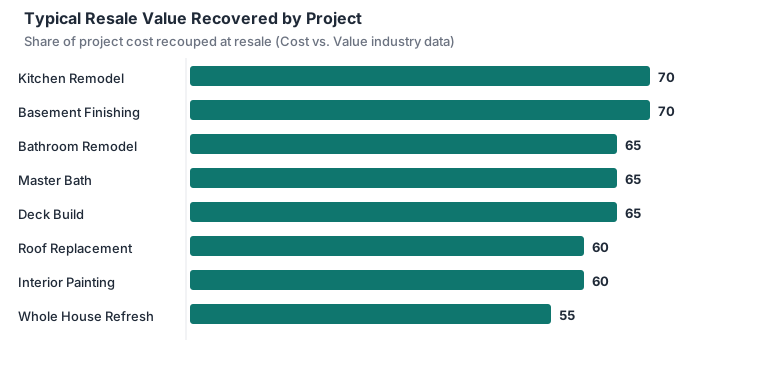
Not all renovations are created equal when it comes to resale value. Some projects return most of their cost when you sell; others are pure lifestyle spending you will never recoup. If resale is on your mind — even years away — understanding renovation ROI helps you spend where it counts.
What "ROI" Really Means for Renovations
Return on investment, in remodeling terms, is the percentage of a project's cost you recover in added home value at resale. A project that costs $20,000 and adds $14,000 to your home's value has a 70% ROI. Very few renovations return more than 100% — remodeling is rarely a profit center. The goal is to choose projects that recover the most while also giving you the use and enjoyment you want in the meantime.
ROI is also a moving target. It depends on your local market, your home's price tier, the quality of the work, and how the project compares to neighborhood norms. The same kitchen remodel returns differently in a hot metro than in a slow rural market.
The Consistently High-ROI Projects
Year after year, national remodeling data points to the same winners — projects that are relatively affordable, improve curb appeal or function, and appeal broadly to buyers:
- Garage door replacement often tops the list, frequently recovering nearly all its cost. It is inexpensive and dramatically improves curb appeal.
- Entry door replacement (especially steel) delivers strong returns for a modest spend.
- Minor kitchen remodels — new counters, hardware, appliances and paint without moving walls — recover a large share of cost and impress buyers.
- Fresh interior and exterior paint is the highest-ROI cosmetic update per dollar, making a home feel move-in ready.
- Manufactured stone veneer and improved siding boost curb appeal with solid returns.
- Deck additions, particularly wood, recover a strong share by adding usable outdoor living space.
The pattern is clear: buyers reward improvements that are visible, functional and broadly appealing, especially those that make the home feel fresh and well-maintained.
The Lower-ROI Projects (That May Still Be Worth It)
Some of the most desirable renovations return the least on a percentage basis:
- Upscale major kitchen remodels — beautiful, but the high cost outpaces the value added.
- Primary suite additions — expensive square footage that recovers a smaller share.
- Home office conversions and highly personalized spaces.
- Backyard pools — costly to install and maintain, and polarizing to buyers.
- High-end bathroom additions — valuable, but rarely cost-recovering.
Lower ROI does not mean "don't do it." If you will live in the home for years and the space will improve your daily life, the enjoyment can justify the spend. Just make the decision with clear eyes about resale rather than assuming you will get the money back.
Why Location Changes Everything
ROI varies dramatically by region and market heat. In fast-appreciating markets, quality updates that match buyer expectations tend to appraise well. In slower markets, over-improving relative to the neighborhood is risky — you can build the nicest house on the block and still be capped by comparable sales. Always renovate toward, not far beyond, your neighborhood's ceiling if resale matters. Browse our state cost guides to see how regional pricing shapes both your cost and your likely return.
The "Don't Over-Improve" Principle
The most common ROI mistake is over-improving for the neighborhood. A $100,000 kitchen in a neighborhood of $350,000 homes will not add $100,000 to your value — buyers shopping that price range are not looking for (or willing to pay for) that kitchen. Match the level of your renovation to your home's tier and your neighbors' homes. The best returns come from bringing a below-average home up to neighborhood standard, not from pushing an already-nice home into luxury territory.
Maintenance and Systems: Invisible but Essential
Some spending is not about adding value but preventing its loss. A failing roof, an old HVAC system, or outdated electrical will not wow buyers, but they will sink a sale or trigger price reductions during inspection. These "invisible" projects protect your home's value and remove objections. A new roof, for instance, rarely returns 100%, but a 20-year-old roof can cost you the sale entirely. Think of essential maintenance as protecting your existing equity rather than growing it.
Curb Appeal Punches Above Its Weight
First impressions drive offers. Landscaping, a fresh front door, clean siding and a tidy entry cost relatively little but shape how buyers feel before they walk in. Because these projects are inexpensive relative to their impact, their effective ROI is high. Never neglect the exterior in favor of interior perfection — buyers decide a lot in the first ten seconds.
How to Renovate Strategically for Resale
- Fix the essentials first — roof, systems, safety. These protect value and prevent deal-killers.
- Prioritize high-ROI cosmetic updates — paint, kitchen refresh, curb appeal.
- Match your neighborhood — renovate toward the ceiling, not beyond it.
- Choose broadly appealing, neutral finishes — bold personal choices narrow your buyer pool.
- Weigh enjoyment against return — for long stays, prioritize how you will live; for short stays, prioritize ROI.
Renovating to Live In vs. Renovating to Sell
The right project depends entirely on your timeline. If you are selling soon, spend only where buyers reward you: fresh neutral paint, updated fixtures, clean flooring, strong curb appeal, and fixing anything that would spook an inspector. Avoid deeply personal, high-cost projects that you won't live to enjoy and buyers won't pay a premium for. If you are staying for years, prioritize how you actually live — the daily comfort of a better kitchen, an added bathroom or finished basement often justifies a lower resale percentage because you collect the real return in enjoyment. The mistake is applying resale logic to a forever home, or lifestyle logic to a house you're about to list. Decide which you are doing first, and let that choice drive every finish-level and scope decision that follows.
The Projects Buyers Notice First
Buyers form an opinion within seconds, and a handful of projects shape it disproportionately. Curb appeal — the front door, landscaping, garage door and exterior paint — sets expectations before anyone steps inside. The kitchen is judged hardest and fastest; clean, functional and neutral beats trendy and dated. Bathrooms are scrutinized for signs of water damage, so a watertight, well-ventilated bath reassures more than a flashy one. Flooring that flows consistently through the main level makes a home feel larger and better maintained. Fresh, light paint makes everything read as move-in ready. Notably, big-ticket invisible work — new HVAC, electrical or plumbing — rarely wins a bidding war, but a failing version of any of them will lose the deal outright. Spend where first impressions are made, and keep the essential systems sound so nothing derails the sale.
Frequently Asked Questions
Which renovation has the best ROI?
Consistently, the highest-return projects are minor kitchen remodels, garage-door and entry-door replacements, and fresh interior paint — relatively low cost with broad buyer appeal. Curb-appeal improvements also punch above their weight.
Do renovations ever return more than 100%?
Rarely on a pure cost basis, but they can. Fixing a deal-breaking defect, adding a needed bathroom in a one-bath home, or finishing space in a hot market can occasionally return more than they cost. Most projects recover 50-80%.
What does "over-improving" mean?
Renovating well beyond the price ceiling of your neighborhood. A luxury kitchen in a modest block won't appraise for what it cost, because comparable sales cap the home's value. Renovate toward your neighborhood ceiling, not past it.
Is it worth renovating before selling?
Targeted, cosmetic updates usually are — paint, fixtures, curb appeal and fixing inspection issues. Major remodels right before selling rarely pay back their full cost; you're better off pricing the home to reflect its condition.
Does a new roof or HVAC add resale value?
They add little excitement but remove major objections. An old or failing roof or system can kill a sale or lower an appraisal, so replacing one at end of life protects the deal more than it boosts the price.
A Simple Framework for Ranking Projects by Return
When several projects compete for the same budget, a quick framework keeps you rational. Score each candidate on four questions. First, does it fix a defect or deal-breaker? Repairs that remove a buyer objection — a failing roof, a broken system, water damage — protect the entire sale and rank highest. Second, how broad is its appeal? Neutral, universally wanted improvements (a clean kitchen, fresh paint, a second bathroom) beat personal or niche additions. Third, what is the cost-to-value ratio? Lower-cost cosmetic work usually recovers a higher percentage than expensive structural change. Fourth, does it fit the neighborhood ceiling? Anything that pushes the home well above comparable sales won't appraise for what it cost. Projects that score well on all four — say, a minor kitchen refresh in a home that needs one — are clear winners. Projects that score poorly, like a luxury addition in a modest area, are where owners lose money even when the work is beautiful. Use this lens before you spend, then confirm the numbers with a cost calculator so your decision rests on data, not hope.
Key Takeaways
Return on a renovation depends far more on which project you choose and where you live than on how much you spend. Keep these principles in mind before you commit:
- Lower-cost cosmetic work — paint, fixtures, minor kitchen and curb-appeal updates — recovers the highest percentage.
- Fixing defects like a failing roof or system protects the whole sale, even if it doesn't excite buyers.
- Don't over-improve: renovate toward your neighborhood ceiling, not beyond it.
- Match the project to your timeline — resale logic for a home you're selling, lifestyle logic for one you'll keep.
- Curb appeal and a clean, neutral kitchen shape a buyer's opinion within seconds.
- Location amplifies everything; the same project returns differently in different markets.
The smartest strategy is to renovate for how you live if you're staying, and for broad buyer appeal if you're selling — and to confirm every decision against real local numbers. Run your specific project through a cost calculator, weigh the estimate against the value it's likely to add in your area, and let data, not hope, guide where your money goes. Remember that appraisers lean heavily on comparable local sales, so the value any project adds is ultimately capped by what similar homes in your neighborhood have actually sold for. Improvements that fix problems, broaden appeal and stay within that ceiling are the ones that reliably pay you back, in enjoyment while you live there and in dollars when you sell.
Run Your Own Numbers
Every home and market is different, so national averages only take you so far. Use our renovation cost calculator to estimate your project's cost and the resale value it is likely to add, then compare projects side by side. The smartest renovators do not chase the trendiest upgrade — they invest where cost, enjoyment and return line up best for their home and their timeline.
Authoritative context: the Bureau of Labor Statistics tracks remodeling labor costs, the IRS publishes home energy tax credits, and HUD lists federal home-repair assistance programs.